What Should a Complete Bag Tech Pack Contain?
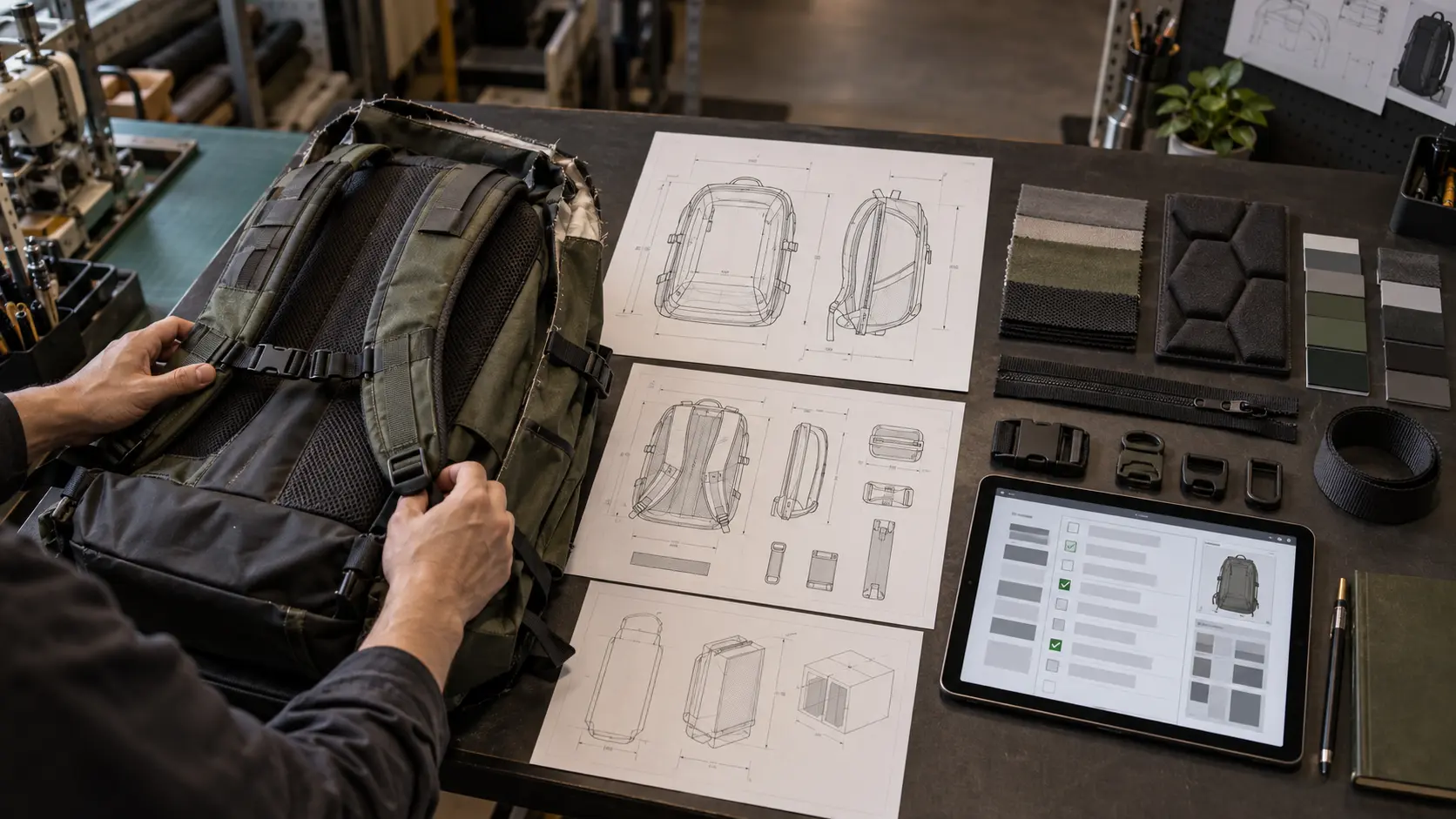
A complete bag tech pack should explain what the product must do, how it is shaped and measured, which materials and components it uses, how it is assembled and branded, what must be tested, how it is packed, and who approves each decision. It should also identify the current revision and the approved physical reference.
That does not mean a start-up needs a perfect industrial file before contacting a factory. A clear concept, reference sample, sketches and honest list of unknowns can be enough to begin development. Completeness is a controlled result of the buyer–factory process, not always the starting point.
What are the essential sections of a bag tech pack?
A manufacturing-ready pack normally covers ten areas:
- Product brief and intended use
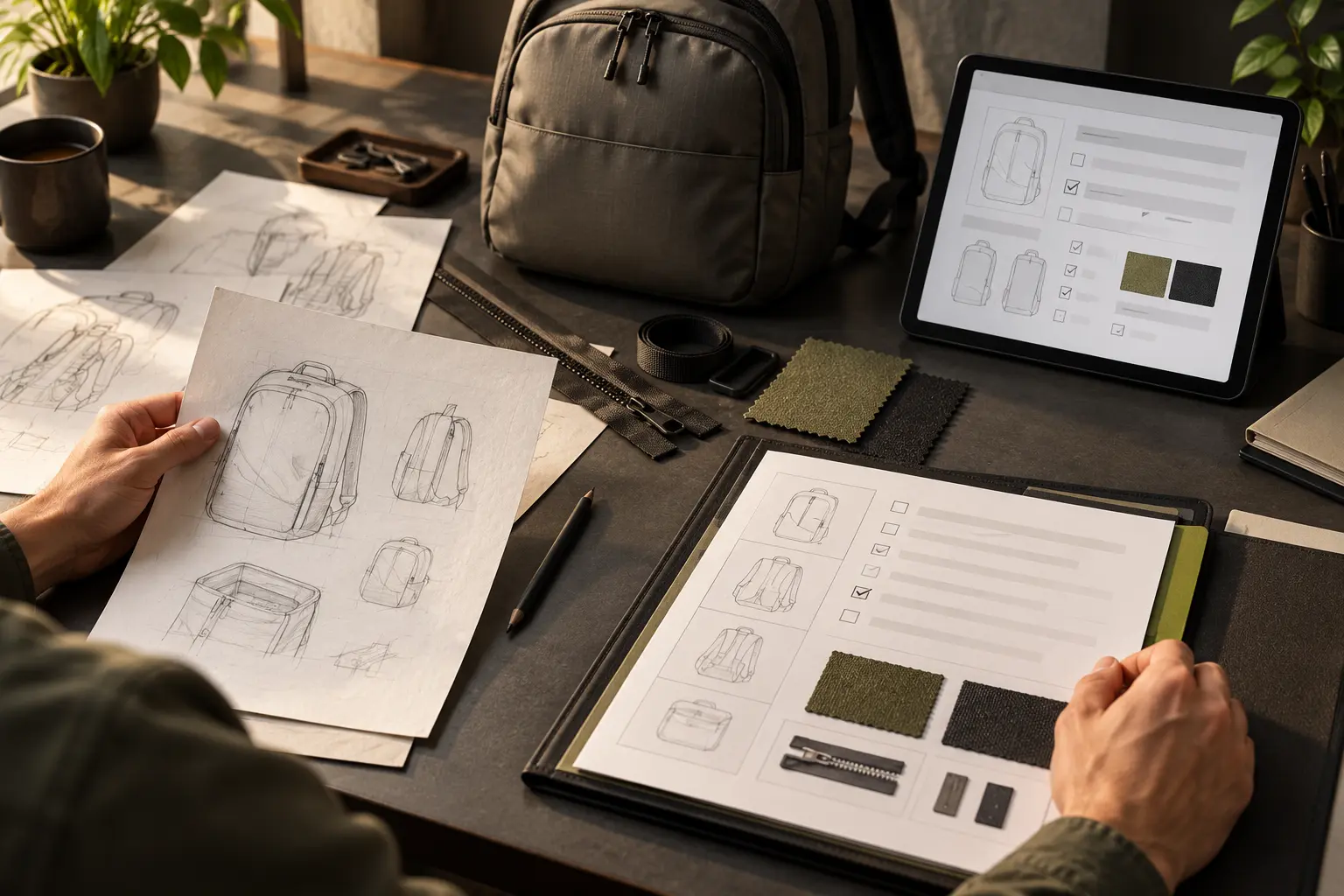
- Technical drawings and overall dimensions
- Pattern, panel and construction details
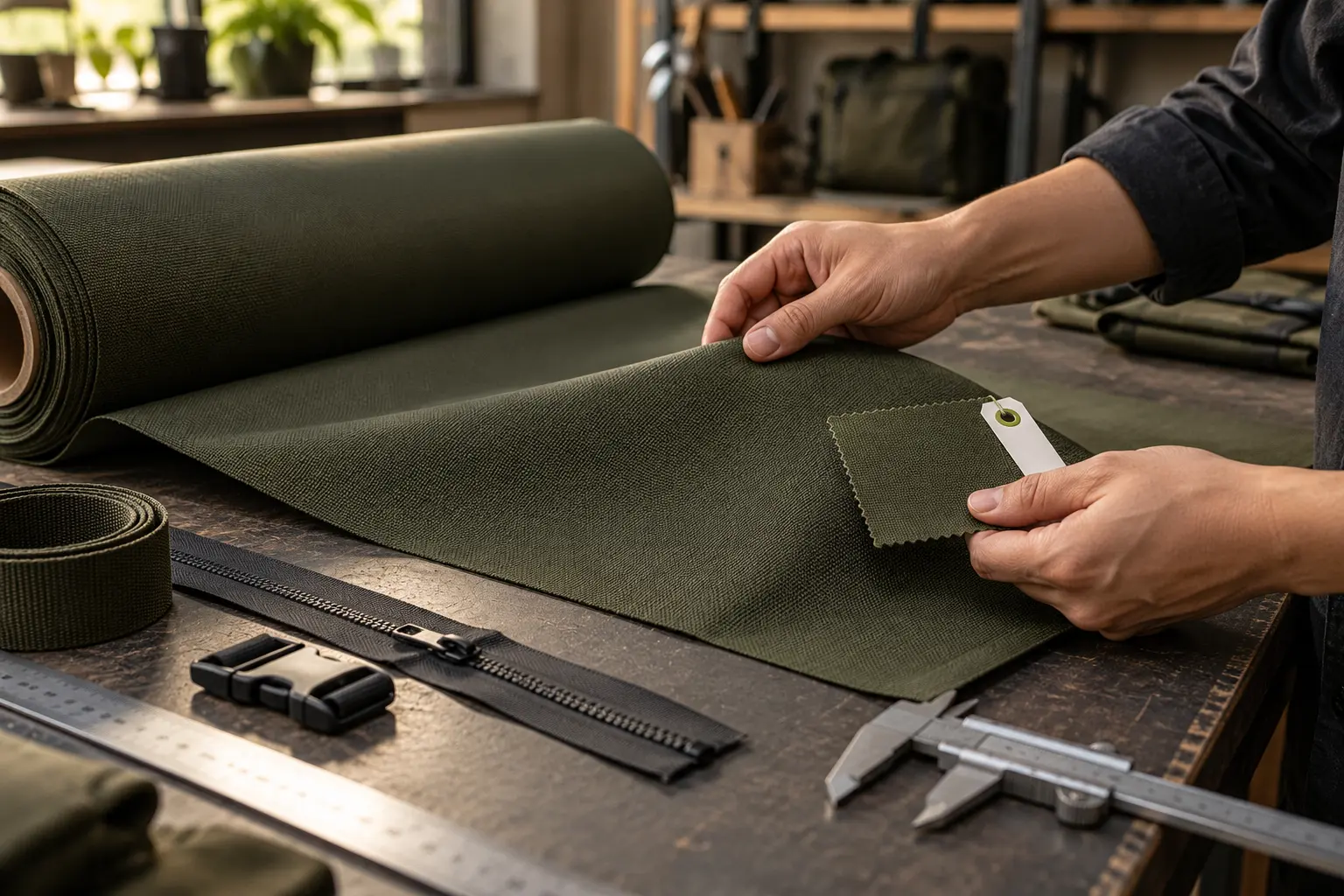
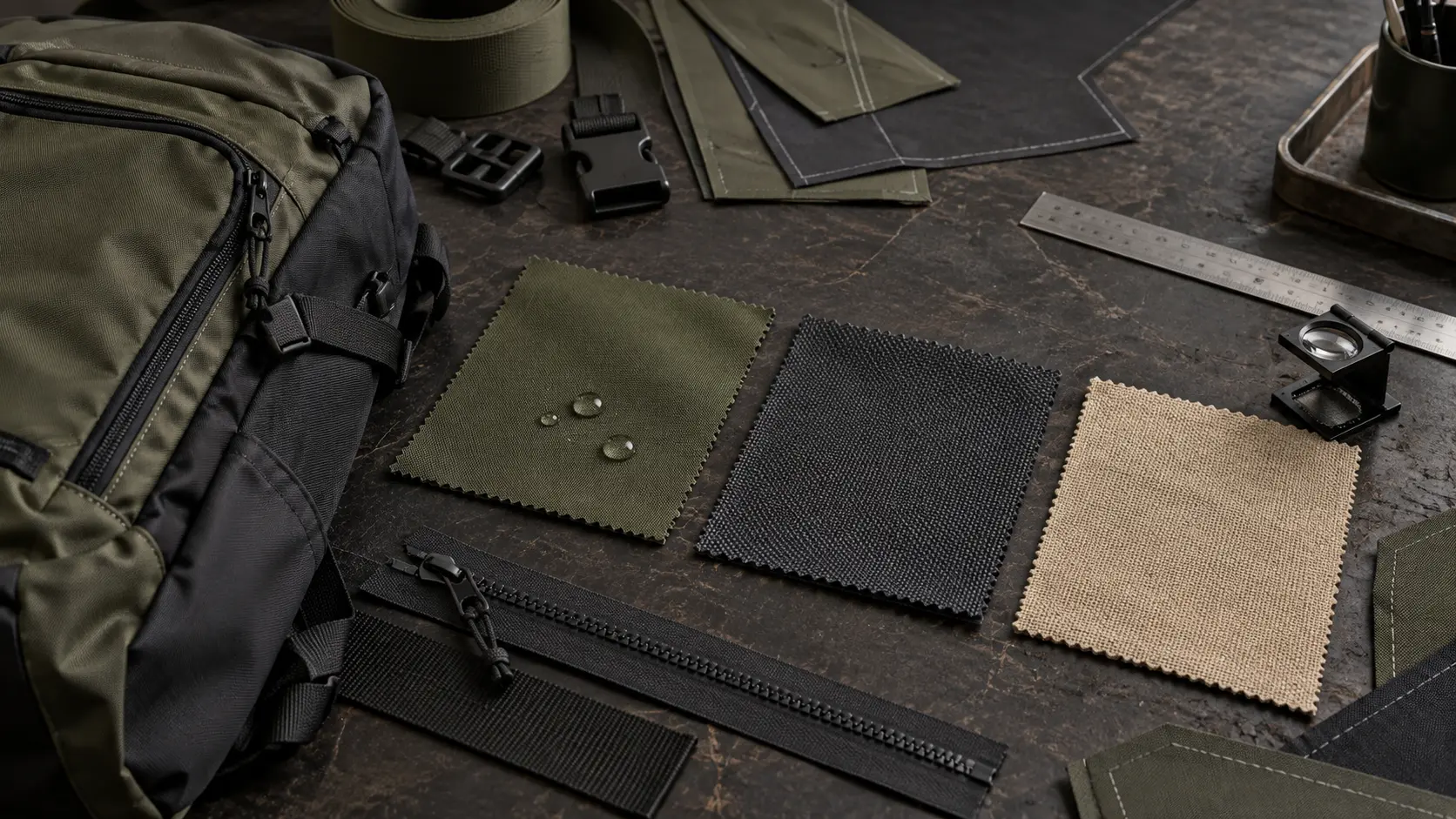
- Bill of materials and component specifications
- Colorways, artwork and branding
- Performance, compliance and test requirements
- Labels, packaging and shipment presentation
- Sample comments and approval status
- Commercial and timing context
- Revision history, ownership and controlled references
The following checklist explains what each section should answer.
1. What should the product brief explain?
The opening page should give the factory the context needed to interpret every later detail.
Include:
- Product name, type and short purpose
- Intended user and sales market
- What the bag carries, including critical item dimensions and loaded weight
- Typical use environment and exposure
- Main performance priorities
- Target quantity, commercial level and launch timing
- Reference products, prototypes or inspiration images, clearly identified as references rather than approved specifications
For a start-up, this page prevents the design from becoming a collection of features without a clear user problem. For an established brand, it helps the supplier understand which existing platform, market standard or product family the new design must join.
2. Which drawings and dimensions are required?
Provide front, back, side, top, bottom and relevant internal views. Add sections or exploded views where layers and hidden construction cannot be understood from the outside.
Dimensions should use one stated unit and show:
- Overall height, width and depth
- Pocket, opening and access dimensions
- Strap lengths and adjustment ranges
- Laptop, bottle, tool, medical insert or equipment clearances
- Capacity target where relevant
- Tolerances for dimensions that affect fit or compatibility
- Measurement method for soft or curved areas
Avoid repeating a dimension in several places unless the values are linked and checked. A drawing that says 420 mm and a comment that says 400 mm creates a decision, not an instruction.
3. How much construction detail is enough?
The tech pack should show how the product is intended to work, but the necessary detail depends on the development stage.
Useful construction information includes:
- Panel and compartment arrangement
- Seam type, binding, edge finish and visible stitch expectations
- Seam allowance where it is controlled by the design
- Reinforcement locations and load paths
- Foam type, thickness, hardness or density requirement where relevant
- Layer order for body, lining, reinforcement and padding
- Zipper direction, opening length and end treatment
- Webbing folds, bartacks, box stitches and other load-bearing details
- Drainage, ventilation, seam sealing or cleanability features
Do not copy a construction from a reference product without confirming that it is suitable, legal to use and compatible with the chosen materials and equipment.
4. What belongs in the bill of materials?
The bill of materials, or BOM, should identify every material and component needed to make and pack the product. Each important line should be specific enough to source, approve and replace under control.
Record where relevant:
| Field | Why it matters |
|---|---|
| Material or component name | Gives the team a common identity |
| Supplier and exact reference | Distinguishes a real item from a generic description |
| Composition, denier, weight and construction | Defines the textile or component more completely |
| Coating, finish and color | Affects appearance, processing and performance |
| Width, size or dimensions | Supports pattern planning, fit and consumption work |
| Bag zone or pattern use | Shows where the item belongs |
| Approval reference | Connects the line to a swatch, sample or signed decision |
| Permitted alternative | Prevents an informal substitution from becoming an approved change |
“Black fabric,” “good zipper” and “standard buckle” are not controlled specifications. See our guides to fabric denier and nylon, polyester and canvas for examples of the detail a material decision may need.
5. How should colors, artwork and branding be specified?
For every colorway, connect the color name to a physical or recognized digital standard and state the approval method. Screen appearance alone is not a reliable textile color approval.
Branding information should include:
- Final vector artwork and revision
- Logo size and placement from fixed reference points
- Application method: print, embroidery, woven label, patch, heat transfer or another process
- Thread, ink, patch or label colors
- Surface, stretch, wash and abrasion considerations
- Legal marks, country-of-origin text and language versions
- Appearance acceptance criteria and approved sample
If artwork changes by colorway or market, list each version. Do not ask production to infer which logo file is current from an email history.
6. Which tests and compliance requirements belong in the file?
State the sales market, intended claims and the evidence required before production. The right tests depend on the product and its use.
Possible requirements include:
- Load, seam strength or strap attachment tests
- Abrasion, tear or breaking-strength tests
- Water resistance or waterproof construction tests
- Colorfastness, crocking or migration checks
- Zipper, buckle and cycle testing
- Dimensional stability and cleaning instructions
- Restricted-substance or market compliance documents
- Recycled-content, chain-of-custody or material certificates
- Product-specific standards requested by the buyer
Name the method, sample conditioning, target and acceptance rule where possible. “Must be waterproof” or “must pass REACH” is not enough to tell a supplier what product claim and evidence the buyer intends to use.
7. Why must packaging be defined before production?
Packaging affects artwork, labels, material sourcing, folded size, carton planning, inspection and delivery presentation. Include:
- Folding or stuffing method
- Polybag or alternative primary packaging
- Warning text and recycling marks by market
- Barcode, SKU and label position
- Hangtags, manuals and inserts
- Units per inner and master carton
- Carton dimensions, weight limits and shipping marks
- Moisture protection or desiccant instructions where justified
An established brand may have a packaging manual. A start-up can begin with a simple packing sketch and list of sales-channel requirements, then refine it before production release.
8. How should sample feedback and approval be recorded?
Sample comments should be decision records, not a collection of messages.
For each comment, show:
- Sample version and review date
- Exact location or feature
- Observed issue or requested change
- Supporting photograph, dimension or document
- Required action and responsible person
- Status: open, accepted, rejected or verified
- Which later sample proves the correction
Separate three approvals when needed: appearance, fit/function and production readiness. A customer’s approval of the color does not automatically approve dimensions, materials, construction or packing.
The physical approved sample—often called the golden sample—must be identified and protected. The file should say what happens if the sample and a later document conflict.
9. What commercial and timing information helps the factory?
A tech pack defines the product, but the development path also depends on commercial reality.
Share:
- Estimated first order and repeat potential
- Target cost direction or retail position when available
- Required Incoterm and delivery destination for quotation comparison
- Sample deadline, review time and approval owner
- Launch or delivery window
- Required tests and approval lead times
- Materials or components that the buyer will nominate or supply
This information allows the factory to propose a realistic material and development route. It is not a substitute for a formal quotation or confirmed production calendar.
10. How should revision control work?
Every issued tech pack should have a revision identifier, date, owner and short change summary. The team should be able to answer four questions immediately:
- Which revision is current?
- Who approved it?
- Which sample and material references support it?
- What changed from the previous revision?
When a change affects cost, material, tooling, testing, packaging or timing, mark the impact for review. Do not silently replace a page while keeping the same revision number.
A single controlled source is better than five almost-identical files in email attachments. Our article on the structured digital brief explains how confirmed facts, open questions, sources and decision owners can be organized before the tech pack is complete.
Can a start-up contact a factory without a complete tech pack?
Yes. A start-up can begin with:
- A one-page product and user brief
- Overall dimensions and key item dimensions
- Sketches, marked-up photographs or a reference sample
- Required features and a list of open questions
- Quantity, budget direction and timing
- Known materials or desired appearance
- The name of the person who can approve decisions
The important point is to label assumptions and gaps honestly. The factory can then explain what must be developed before quotation, sampling or production.
Use the free FFG Bags Tech Pack Checklist to prepare the first conversation.
What does an established brand need beyond the basic checklist?
Larger programs often need additional control:
- Standard component libraries and nominated suppliers
- Seasonal color and artwork management
- Regional compliance and labeling versions
- Approved material substitution rules
- Testing plans and third-party laboratory coordination
- Size or capacity grading rules
- Packaging, SKU and barcode matrices
- Formal change requests and approval responsibilities
- Product lifecycle links to purchasing, quality and enterprise systems
The file should remain usable by the people making decisions. More pages do not automatically mean better control.
Can ERP, custom tools or AI make a tech pack complete automatically?
No. Digital tools can organize evidence, find missing fields, compare revisions and reduce re-entry, but they cannot turn an unsupported assumption into an approved specification.
FFG uses Odoo for official business records. Private custom workflow tools are being piloted to organize selected project inputs and references before human review. They do not automatically approve feasibility, materials, costs, sample changes or production release.
FFG also ran a controlled AI tech-pack review pilot using 20 fictional cases. Five replies passed the technical validation gates as unconfirmed suggestions, fourteen were rejected by evidence or output checks, and one timed out. No staff time saving was established. The result is clear: AI can help surface possible gaps, but the tested version is not ready to replace experienced review or become a routine approval tool.
This distinction matters:
| Status | Safe interpretation |
|---|---|
| Operating system | Holds the official business record and approved transactions |
| Private pilot | Tests a limited workflow with human checks and defined boundaries |
| Future plan | Must not be described as an achieved capability |
For customers, the practical promise is simple: technology should make the project state clearer. Final technical and commercial decisions remain controlled by people and documented approvals.
How can FFG help complete a bag tech pack?
FFG can review the available brief, drawings, reference sample, material direction, quantity and timing, then identify the missing decisions needed for the next stage. Depending on project maturity, that next stage may be clarification, material sourcing, pattern development, costing or sampling.
Explore our product-development and manufacturing capabilities, browse more Educational articles, or send us the information you already have. A clear partial package is welcome; hidden assumptions are the real problem.
The short answer
A complete bag tech pack connects product intent, drawings, dimensions, construction, materials, branding, testing, packaging, sample approvals and revision history. It tells the team what is confirmed, what is still open, who decides and which physical or digital reference controls the next action.
The goal is not a beautiful document. The goal is a product definition that the buyer and factory can use without guessing.