Fabric Denier Explained: What 300D, 500D and 1000D Mean for Bag Buyers
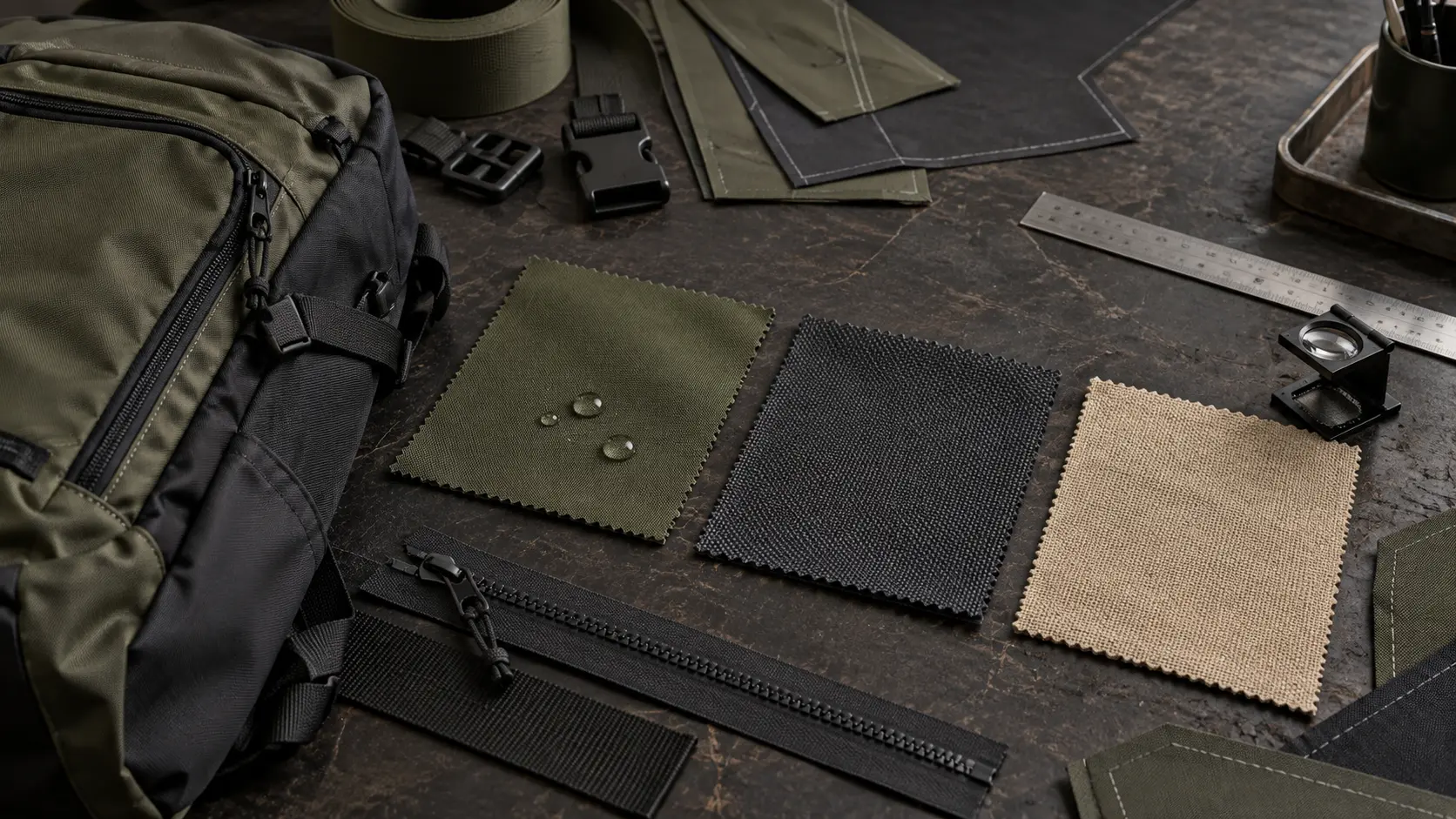
Fabric denier tells you the linear density of the yarn used in a textile. It is useful, but it does not tell you by itself whether a finished bag fabric is strong, waterproof, lightweight or suitable for a particular product. A good material decision combines denier with fiber type, weave, fabric weight, coating, finish, test results and the real use case.
For bag buyers, values such as 300D, 500D and 1000D are best treated as the beginning of a specification—not as a complete performance ranking.
What does denier mean?
One denier means that 9,000 metres of yarn weigh one gram. A 500-denier yarn therefore has a nominal mass of 500 grams per 9,000 metres, while a 1,000-denier yarn has a nominal mass of 1,000 grams over the same length.
This is a measure of linear density: how much a defined length of yarn weighs. It is not the total weight of a square metre of finished fabric, and it is not a direct measurement of strength.
The textile industry also uses tex and decitex. One tex is one gram per 1,000 metres, and one tex equals nine denier. Buyers do not normally need to calculate these conversions, but they should understand that all these systems describe yarn size rather than complete fabric performance.
Does a higher denier always mean a stronger fabric?
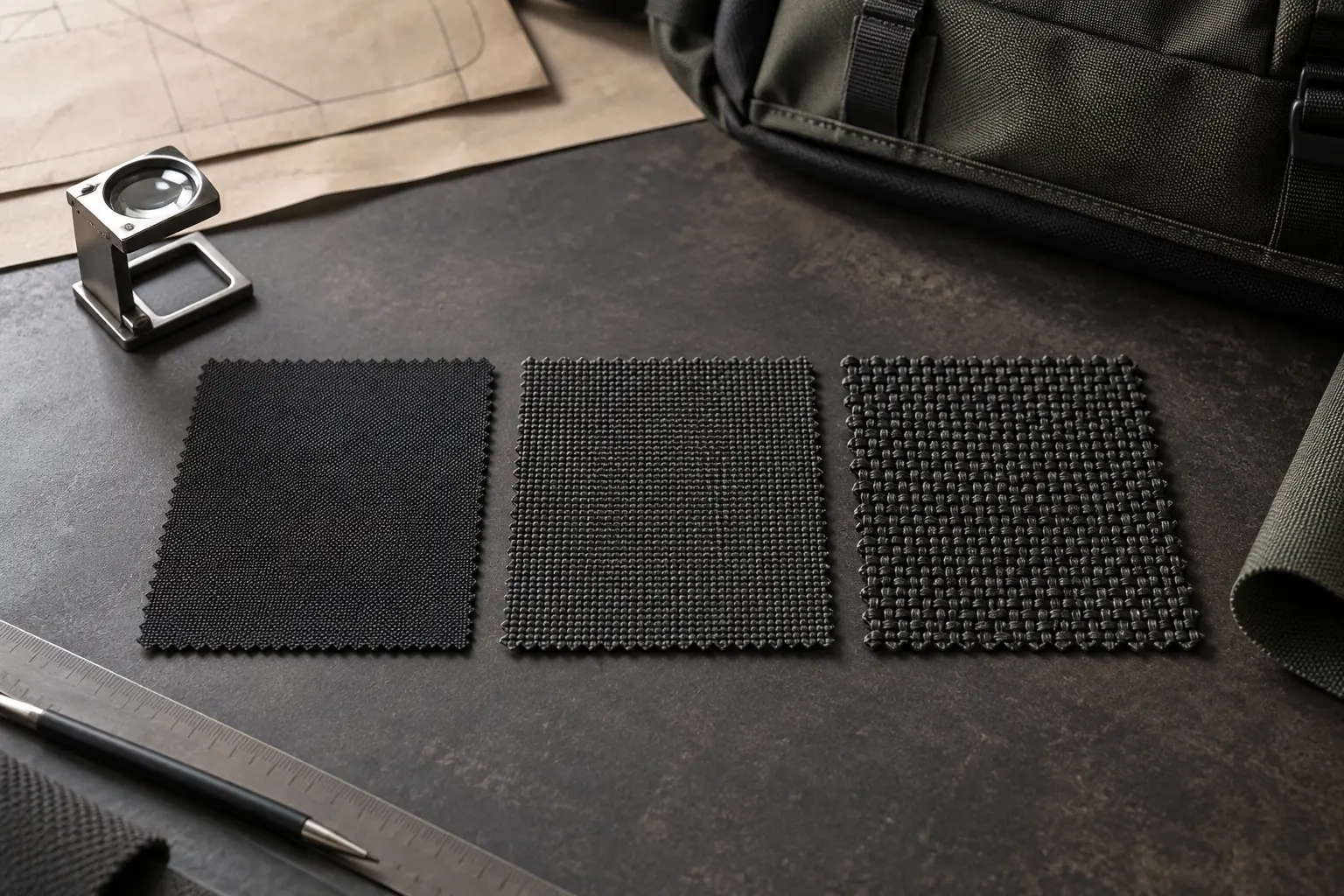
No. When the fiber, yarn construction, weave and finishing are otherwise comparable, a higher-denier yarn is generally coarser and may contribute to a heavier, more substantial fabric. But two fabrics with the same denier can perform very differently.
The result also depends on:
- Whether the fiber is nylon, polyester or another material
- The quality and tenacity of the yarn
- How tightly the fabric is woven
- Whether the construction is plain, basket, dobby or ripstop
- The finished fabric weight
- Coatings, laminations and water-repellent finishes
- Heat, UV, hydrolysis, moisture and chemical exposure
- The test method used to evaluate performance
This distinction is reflected in textile standards. Yarn linear density, fabric abrasion resistance, breaking strength and tearing strength are evaluated as different properties. Even an abrasion result must be related carefully to the intended use rather than treated as a universal prediction of product life.
The practical conclusion is simple: do not approve a fabric only because its denier number sounds strong.
How should buyers think about 300D, 500D and 1000D?
The following comparison is a starting point, not a guaranteed performance table.
| Denier range | Typical design direction | Potential advantages | Questions to check |
|---|---|---|---|
| Around 300D | Lightweight bodies, daypacks, travel organisers, linings or less exposed zones | Lower weight, easier folding, potentially softer hand feel | Is abrasion performance sufficient? Does the fabric need reinforcement or backing? |
| Around 500D | Technical backpacks, tactical equipment, outdoor packs and balanced all-purpose constructions | Useful balance of durability, structure and weight in many fabric families | Which fiber, weave, coating and test standard are specified? |
| Around 1000D | High-wear panels, equipment bags, bases, reinforcement zones and demanding professional uses | More substantial construction and strong abrasion potential in appropriate fabric systems | Is the additional weight and stiffness justified throughout the product? |
A supplier may also propose 210D, 420D, 600D, 700D or other values. These are not automatically inferior or superior. The correct question is whether the complete material specification matches the zone and the product requirement.
For example, CORDURA® Classic Fabric is offered in several yarn sizes, including 330D, 500D, 700D and 1000D, as well as different woven constructions and finish options. That range illustrates why a brand name or denier number still needs a complete specification.
Why fabric weight and denier are not the same
Denier refers to yarn. Fabric weight refers to the mass of the completed textile over an area, normally stated in grams per square metre or ounces per square yard.
Two fabrics can use yarn of the same denier but have different finished weights because of weave density, yarn arrangement, coating or lamination. Conversely, fabrics with different yarn sizes can sometimes reach similar overall weights through different constructions.
When comparing material offers, ask for both where relevant:
| Specification | What it helps explain |
|---|---|
| Fiber and yarn type | Material family, tenacity and expected behaviour |
| Denier | Linear density of the yarn |
| Fabric weight | Mass of the finished textile per unit area |
| Weave or construction | Structure, appearance, tear behaviour and hand feel |
| Coating or lamination | Water resistance, stiffness, ageing and bonding considerations |
| Test result and method | Performance measured under stated conditions |
This is especially important when comparing quotations. “500D fabric” is not detailed enough to prove that two suppliers are pricing equivalent materials.
Which denier should be used for a custom bag?
The best answer often depends on the exact part of the bag. A product does not need to use one denier everywhere.
Consider the material by zone:
| Bag zone | Main questions |
|---|---|
| Main body | What balance of appearance, structure, durability and weight is required? |
| Base | Will it be dragged, placed on rough floors or exposed to moisture? |
| High-wear corners | Is local reinforcement more efficient than making the whole bag heavier? |
| Lining | Does it need visibility, cleanability, tear resistance or low weight? |
| Pockets | Do they need stretch, drainage, soft hand feel or abrasion resistance? |
| Shoulder and load zones | Which fabric, foam, webbing and stitch construction work together under load? |
A lightweight main body with a tougher base can be more appropriate than 1000D across the entire bag. A heavily coated high-denier fabric can also become difficult to fold, bind or sew in tight areas. Material choice must therefore be reviewed together with the pattern and assembly method.
What denier does not tell you about water resistance
Denier does not equal waterproofness. Water performance depends on the textile construction, coating or membrane, seam design, needle holes, zipper selection, openings and the testing requirement.
A fabric may be described as water-repellent or water-resistant while the completed bag still allows water through seams and closures. If the product requires meaningful weather protection, define the full construction and expected test—not only the outer-fabric denier.
For more on this distinction, see our article on seam sealing and waterproof bag construction.
What should a buyer request from a material supplier or factory?
A useful fabric specification should identify more than one number. Ask for:
- Fiber type, such as nylon or polyester
- Full product or mill reference
- Yarn denier and finished fabric weight
- Weave or knit construction
- Coating, lamination and face finish
- Color and color-matching requirement
- Usable width
- Minimum order and available stock position
- Relevant abrasion, tear, breaking-strength or colorfastness results
- The exact test method and test conditions behind each result
- Restricted-substance, recycled-content or other required documentation
- Known exposure risks such as UV, moisture, heat, salt, sweat or hydrolysis
The ASTM D1907 method covers yarn linear density. Separate standards address abrasion resistance, fabric breaking strength and tearing strength. Buyers do not always need to prescribe those exact methods, but every performance claim should make clear what was tested and how.
Common mistakes when choosing bag fabric by denier
Avoid these shortcuts:
- Assuming 1000D is automatically twice as durable as 500D
- Comparing nylon and polyester only by their denier number
- Treating denier as fabric weight
- Assuming a higher denier is automatically waterproof
- Ignoring coating ageing, stiffness or sewing behaviour
- Using the heaviest option in every zone without considering comfort and weight
- Accepting a test result without its method, units and conditions
- Approving a generic description such as “600D polyester” without a controlled material reference
These mistakes can create unnecessary weight, cost, sourcing risk or inconsistent production.
A practical material-selection checklist
Before approving a fabric, confirm:
- Use: What will the bag carry, and where will it be used?
- Zone: Is the material for the body, base, lining or reinforcement?
- Full specification: Fiber, denier, weight, weave, coating and finish.
- Performance: Which abrasion, tear, strength, water or ageing requirement matters?
- Evidence: Is there a relevant test method and result?
- Manufacturability: Can the material be folded, cut, sewn and bound as designed?
- Availability: Is the selected quality and color realistic for the order quantity and timeline?
- Approval: Is the final mill reference recorded in the tech pack and approved sample?
The main takeaway
Denier is useful because it helps describe yarn size. It is not a complete durability grade.
The right bag fabric is the one that balances weight, structure, hand feel, abrasion, tear strength, water performance, appearance, availability, cost and manufacturing behaviour for the intended use. Sometimes that means 300D, sometimes 500D, sometimes 1000D—and often it means combining different materials in different zones.
Continue with our guide to turning a bag idea into a manufacturable product, explore the full Educational article library, or use the Tech Pack Checklist to record the complete material specification.
If you are comparing materials for a custom technical bag, review FFG Bags’ capabilities or send us your use case, reference photos and target quantity. We can help identify the questions that should be resolved before sampling.