Incoming Material Inspection: What Should a Bag Factory Check Before Cutting?
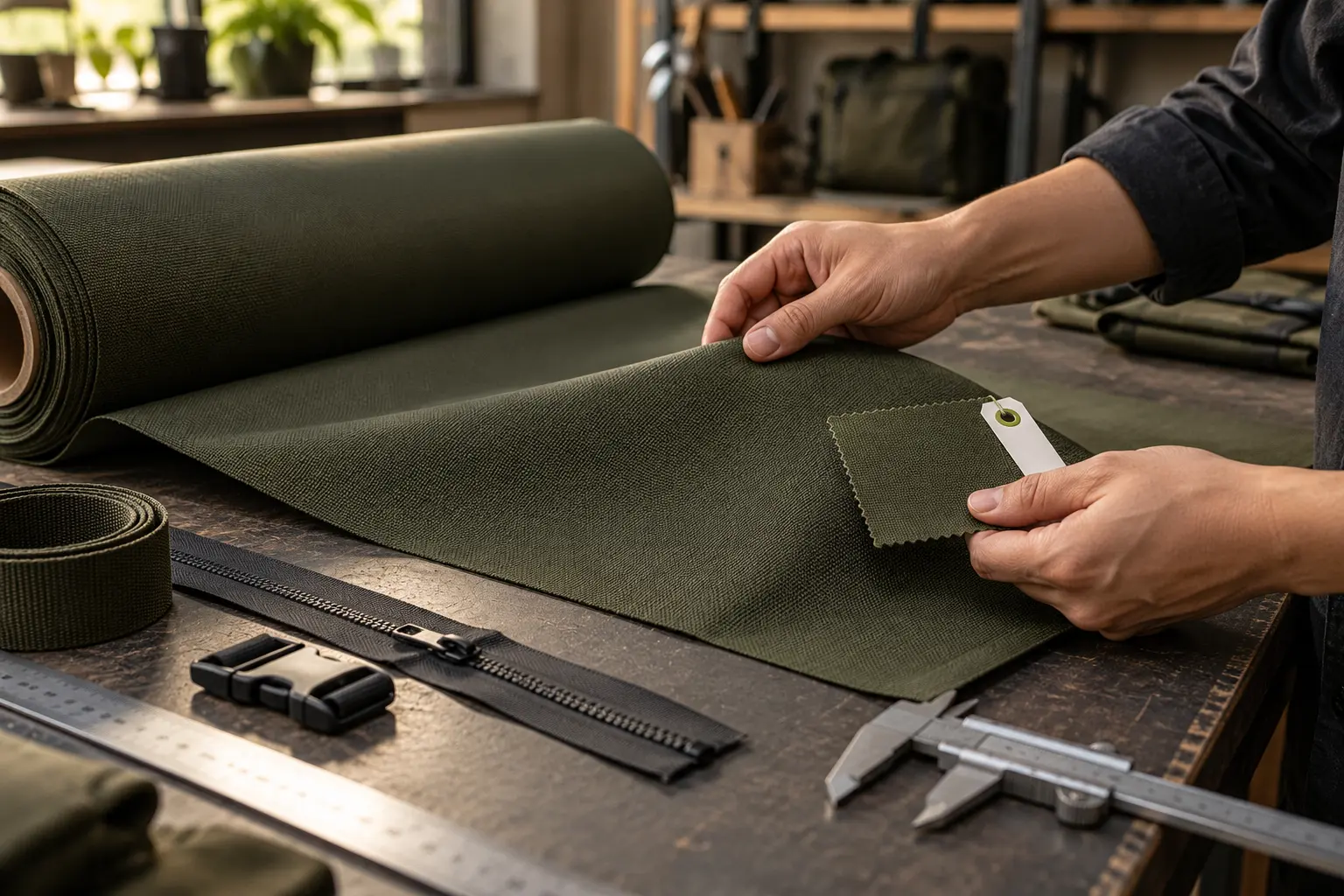
Before cutting, a bag factory should check that delivered materials match the approved references, identify the received lots, assess the agreed physical and visual characteristics, record defects and shortages, and make a documented decision about use. Materials awaiting a decision should remain distinguishable from materials released for production.
The purpose is practical: a wrong coating, inconsistent shade, narrow usable width or mismatched buckle can become much more expensive after it has been cut and sewn into a bag. Incoming inspection helps identify these risks early. It cannot guarantee that every later production step will be correct.
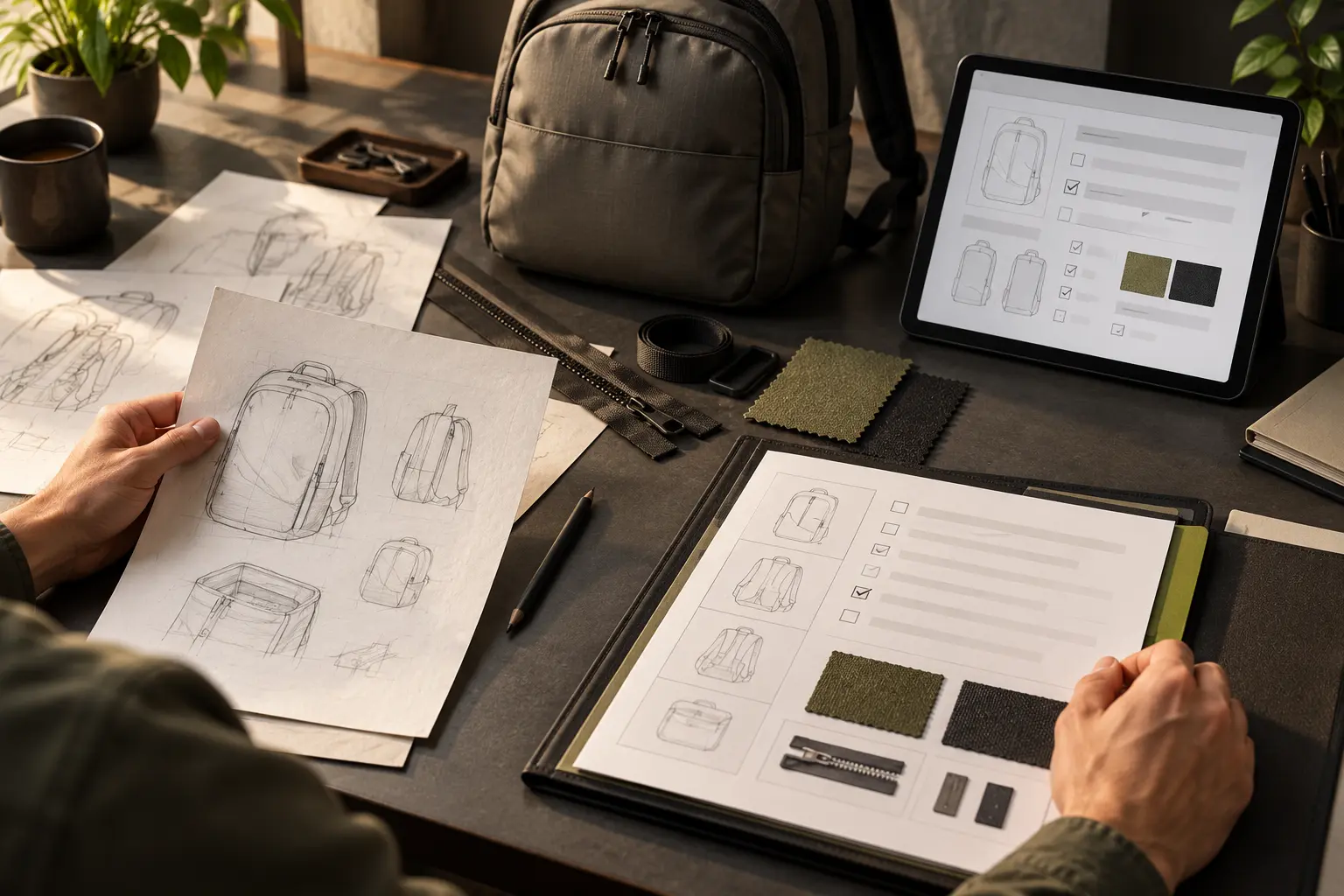
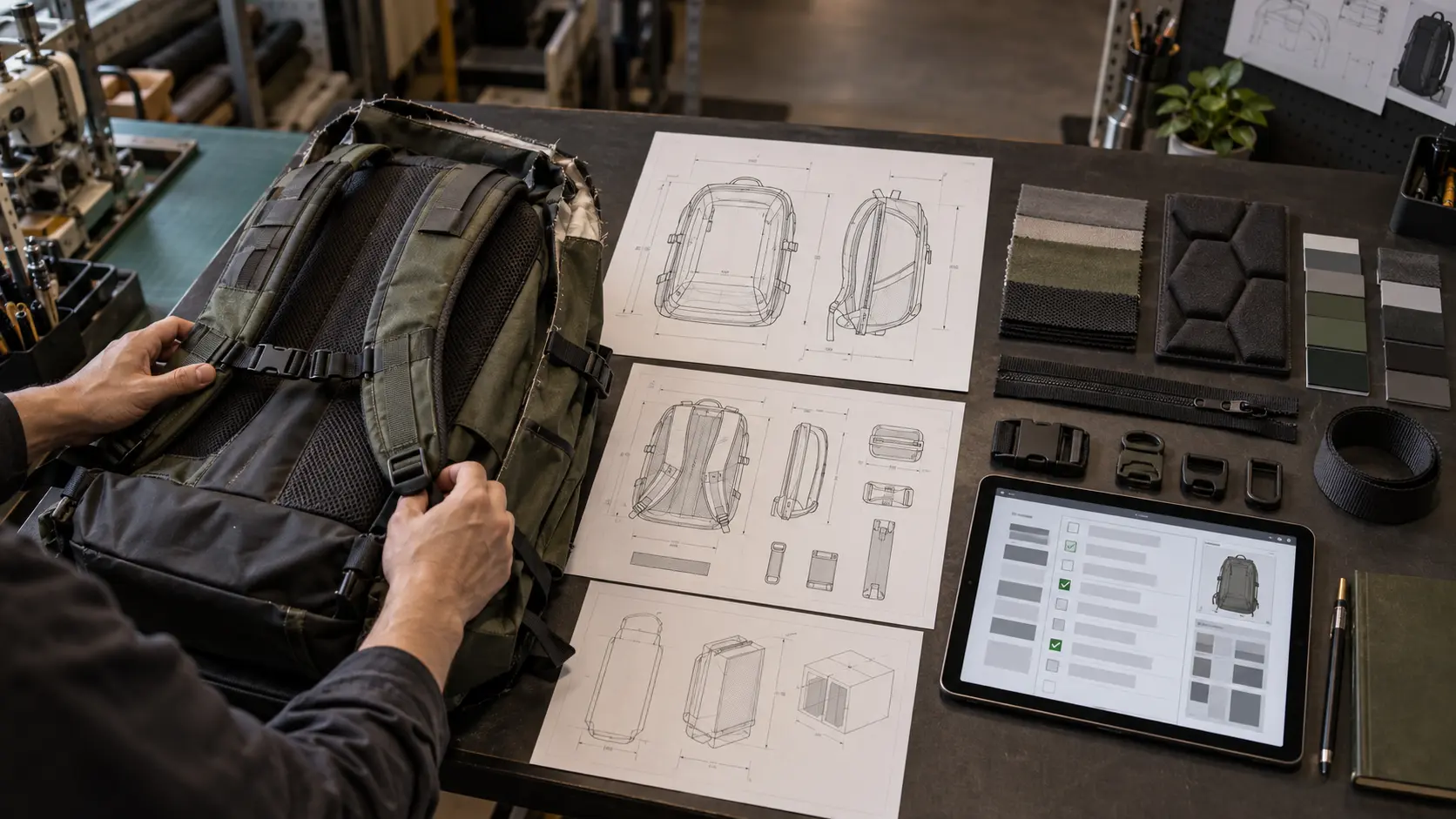
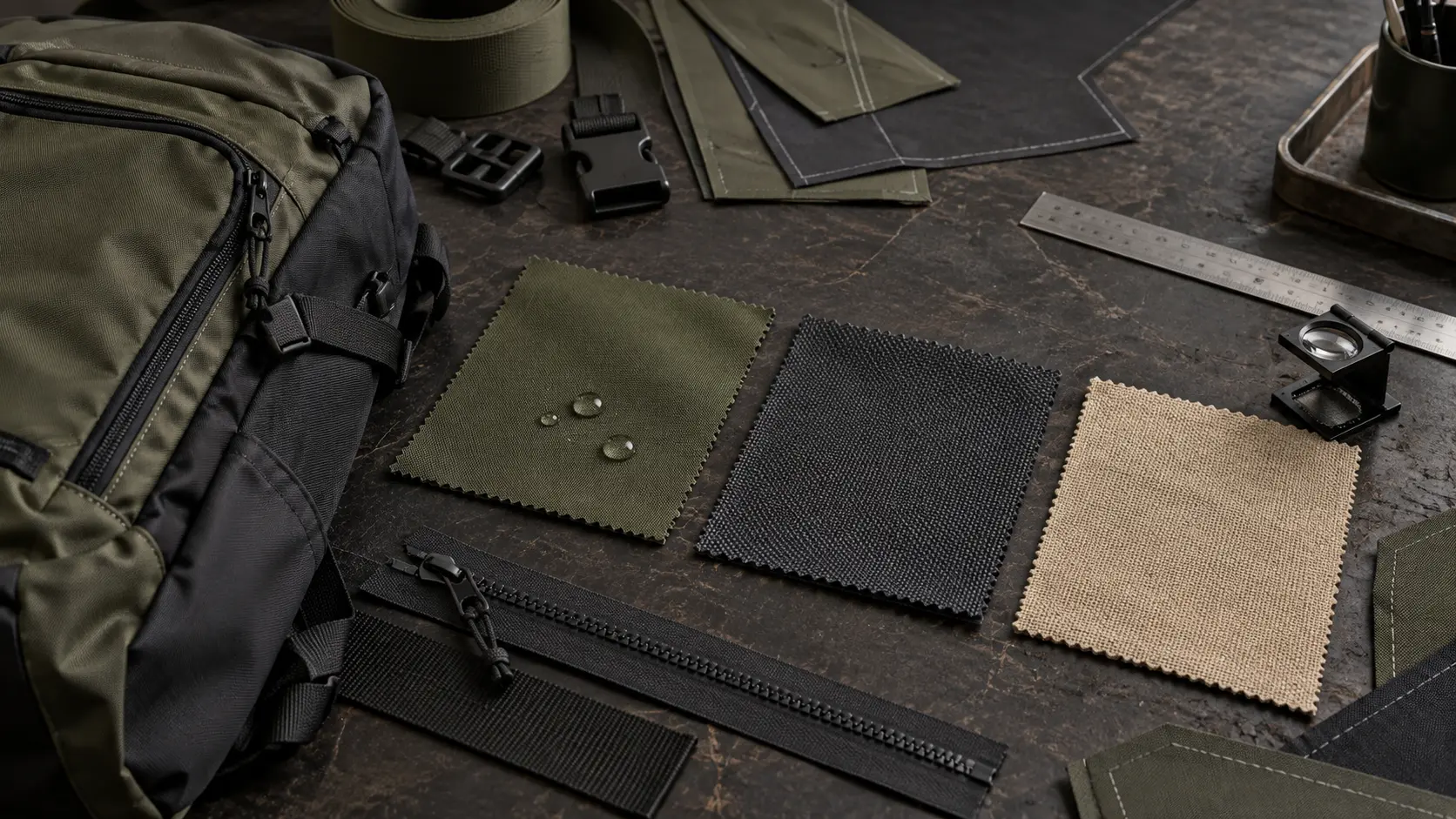
Cover: generated editorial illustration, not a photograph of an FFG inspection or proof of a test result.
What information is needed before materials arrive?
An inspection needs an agreed reference. A purchase order saying only “black 500D fabric” leaves too much open.
For each important material, define the supplier reference, construction, finished weight or thickness where relevant, color and finish, usable width, required performance, quantity and permitted variation. Keep an approved swatch or component sample and identify its revision. A change agreed during sampling should reach the purchasing and inspection records too.
Our guides to fabric denier and nylon, polyester and canvas explain why a familiar material name is only a starting point.
What should the receiving checklist cover?
| Check | Practical question |
|---|---|
| Identity and lot | Is this the ordered supplier reference, color and batch, with traceable roll or carton identification? |
| Quantity and condition | Do counts, lengths and packaging condition match the delivery record? Is there visible moisture, dirt or damage? |
| Fabric dimensions | Does usable width meet the cutting requirement? Are agreed weight or thickness checks within the specified limits? |
| Appearance | Are shade, weave, coating and surface appearance consistent with the approved reference and within the lot? |
| Visible defects | Are there holes, stains, broken yarns, coating irregularities or other defects that affect usable areas? |
| Components | Do webbing width, zipper type, slider, buckle fit and other specified characteristics match the approved components? |
| Evidence | Are the required supplier documents or test reports present, applicable and linked to the material being received? |
| Decision | Who releases, holds or rejects the material, and where is that decision recorded? |
The checks and their frequency should follow the material, product risk and buyer agreement. This table is a planning aid, not a claim that every factory applies one identical procedure.
Is visual inspection enough to prove performance?
No. A fabric can look correct and still fail a requirement for abrasion, tear strength, coating adhesion or water resistance. A buckle that fits is not automatically proven for a specified load.
Separate identity and appearance checks from the performance tests and compliance evidence the project requires. Agree the test method, conditioning where relevant, acceptance criteria and applicable material reference. A report for another construction or an unidentified batch may not answer the buyer’s question.
For waterproof products, the complete construction and seam treatment matter as well as the fabric. A visual receiving check does not certify the finished bag as waterproof.
Should every delivery use a four-point system or AQL?
Choose the method to match the question. ASTM D5430 describes visual fabric examination and grading; buyer and supplier should agree the grading option and acceptance basis. A point score does not replace all other material requirements.
For suitable lots of discrete components, an agreed acceptance-sampling plan may be useful. ISO 2859-1 covers AQL-indexed sampling by attributes. It should not be reduced to an arbitrary percentage of every delivery or treated as a promise of zero defects. Fabric-roll grading and component acceptance sampling answer different questions.
What happens when something does not match?
Identify the affected material and keep its status clear. Record the reference, lot, quantity, defect location where useful, photographs, evidence reviewed and responsible decision-maker. Then decide whether to reject, replace, sort, test further or request an explicitly approved concession.
Do not silently substitute another coating, color or component because production is waiting. If a buyer-approved specification is affected, obtain the relevant agreement before use. Keep any concession limited to its stated scope; it should not quietly become the new specification.
What should a buyer ask the factory?
Ask which references inspection uses, how affected lots are identified, what happens when evidence is missing, and who can authorize release. Also ask how an approved material change reaches cutting, sewing and later repeat orders.
For a new project, include these expectations in the Tech Pack Checklist. For an existing program, begin with the most consequential materials rather than adding paperwork without a decision purpose.
FFG can discuss the receiving checks and evidence appropriate to your bag, its use and manufacturing requirements. Explore our capabilities, consult the Resources and Educational articles, or send your project requirements.