Nylon vs Polyester vs Canvas: Choosing the Right Fabric for a Technical Bag
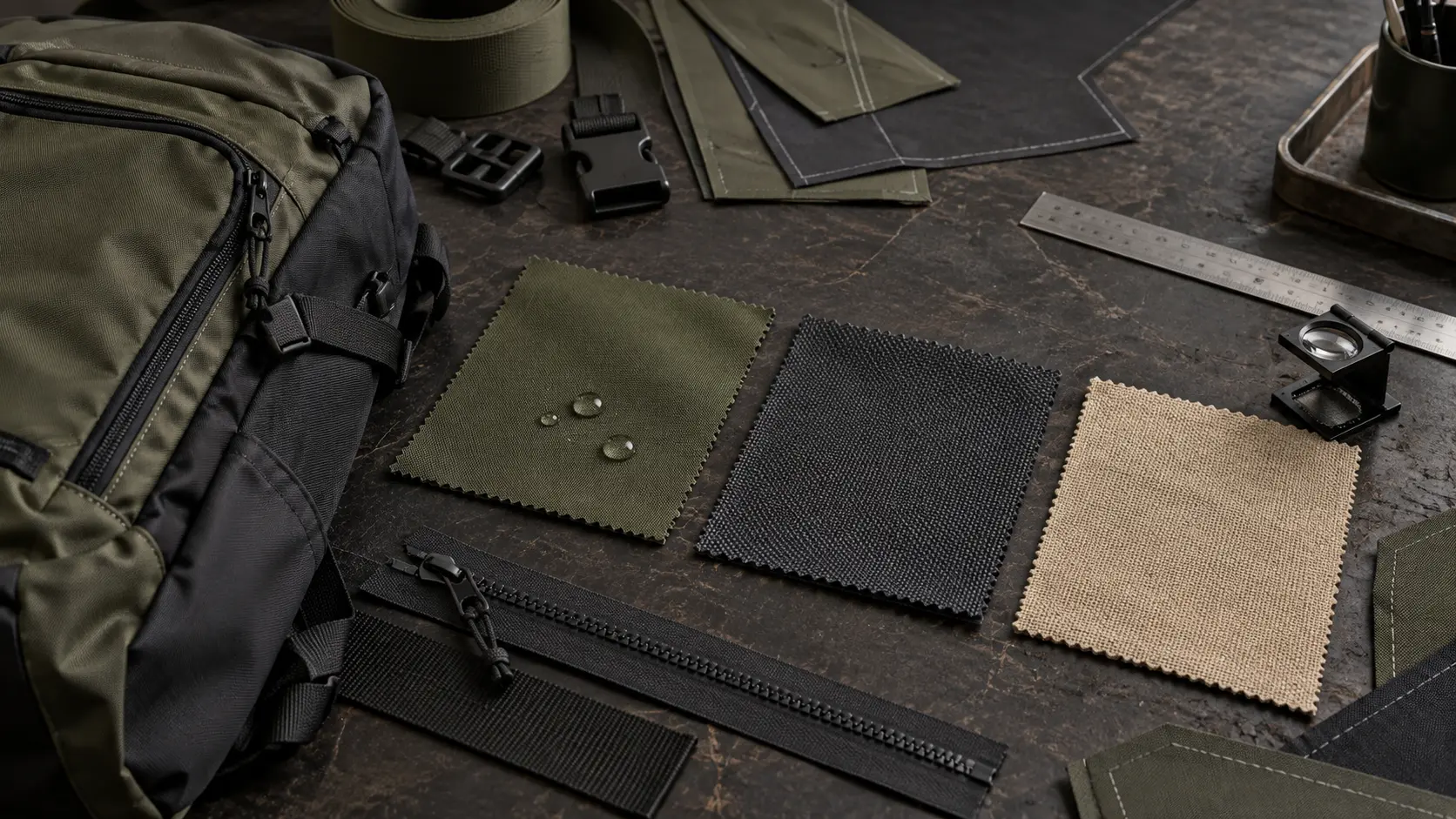
Nylon, polyester and cotton canvas can all be suitable for a technical bag. The right choice depends on the complete fabric construction, the product’s real use, the required appearance, expected care, target weight, weather exposure, test requirements and budget. Fiber name alone does not decide performance.
For many performance-led backpacks and equipment bags, nylon or polyester provides a practical starting point. Canvas can be the better direction when a natural hand, heritage appearance or structured feel matters more. The final decision should compare actual material references, not generic labels.
Which is best for a technical bag: nylon, polyester or canvas?
There is no universal winner.
- Nylon is often considered for demanding technical constructions where durability, flexibility and a strong performance-to-weight direction are important.
- Polyester is widely used for durable, quick-drying synthetic bag fabrics and can offer a broad range of weights, textures, finishes and commercial price points.
- Cotton canvas gives a natural texture and distinctive visual character. Its weight, finish, water behaviour, care and abrasion requirements need careful definition for the intended use.
These are design directions, not guaranteed test results. A high-quality polyester can be more suitable than a poorly specified nylon. A coated canvas can behave very differently from untreated canvas. A lightweight construction with targeted reinforcement can outperform a heavier fabric used without a clear zone strategy.
What is the practical difference between the three materials?
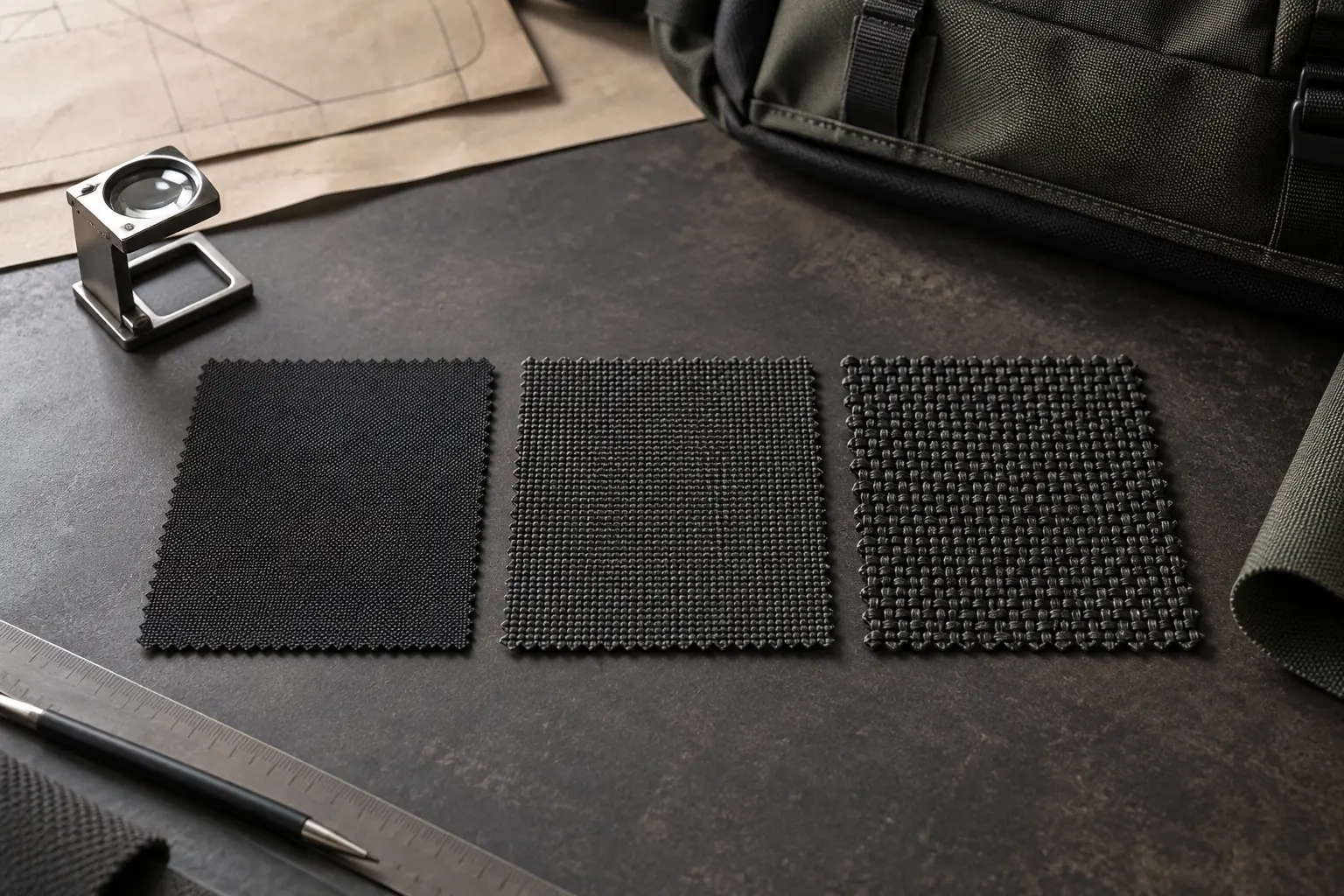
| Material direction | Often considered when | Potential tradeoffs to review | What the buyer should request |
|---|---|---|---|
| Nylon | Technical backpacks, outdoor equipment, tactical or professional products, high-wear zones | Cost, coating ageing, heat or UV exposure, surface appearance, stiffness | Exact polyamide type, yarn and weave, finished weight, coating, finish and relevant tests |
| Polyester | Daypacks, travel bags, branded programs, uniforms, organizers and many outdoor applications | The word “polyester” covers very different yarn qualities, weaves and finishes | Yarn specification, finished weight, construction, coating, color requirement and test method |
| Cotton canvas | Heritage, lifestyle, workwear-inspired or natural-feel products | Water absorption, drying, shrinkage, color change, weight, care and mildew risk in unsuitable conditions | Fiber composition, weave, finished weight, preshrink or finish, colorfastness and care requirement |
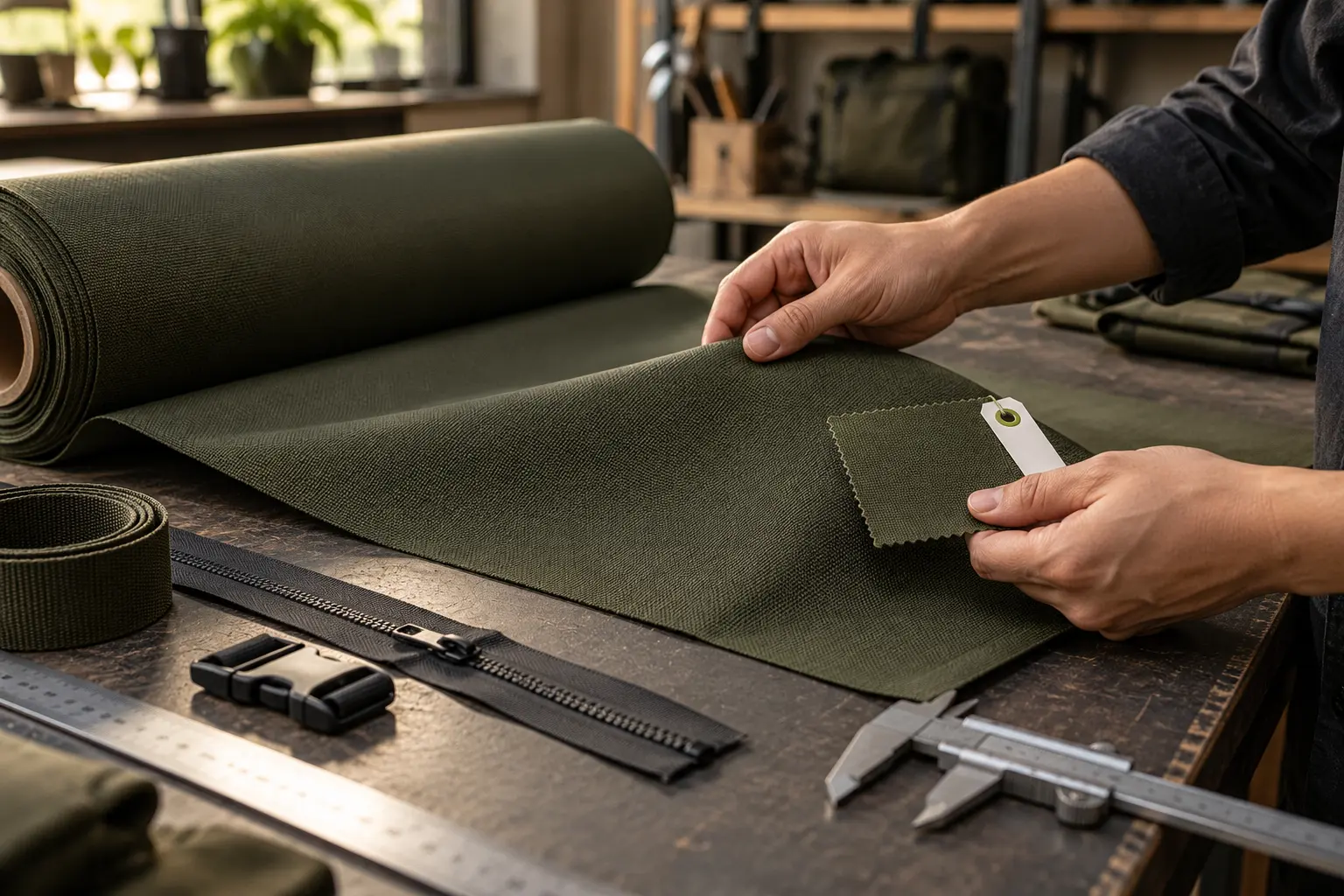
The table is a first-screening guide. Approval should use a named supplier reference, physical swatch and the performance evidence required for the product.
Is nylon always more durable than polyester?
No. Nylon is a family of polyamides, and polyester is another broad fiber family. Finished performance depends on far more than the family name.
Textile Exchange describes nylon as a performance fiber valued for durability, while its overview of synthetic fibers describes polyester as strong, durable, crease-resistant and quick to dry. These descriptions explain why both are common in technical products, but they do not make every nylon fabric superior to every polyester fabric.
Compare the actual materials for:
- Yarn type and tenacity
- Denier and finished fabric weight
- Weave density and construction
- Abrasion, tear and breaking-strength results using stated methods
- Coating or lamination system
- Hydrolysis, heat, UV and moisture exposure where relevant
- Seam, needle and folding behaviour during assembly
- Colorfastness and surface appearance after use
A useful example is CORDURA® Classic Fabric, a specific family made with high-tenacity nylon 6,6 yarns and offered across several deniers and finish options. Its published properties belong to that defined fabric family. They should not be copied onto an unnamed “nylon” offer.
Is polyester a lower-quality choice for bags?
No. Polyester is not automatically a budget substitute, just as nylon is not automatically premium. Both fibers appear in basic and highly engineered textiles.
Polyester may be a strong option when a project needs:
- A durable synthetic fabric with a controlled weight and hand feel
- Fast drying compared with an absorbent natural-fiber construction
- A wide choice of weaves, colors, printed surfaces and finishes
- Repeatable sourcing for a larger branded program
- A material family available at several commercial levels
The correct comparison is not “nylon versus polyester” in the abstract. It is supplier reference A versus supplier reference B, using the same product requirement and test method.
When does cotton canvas make sense?
Canvas can be an excellent design choice when the material’s natural appearance is part of the product value. It is often considered for heritage packs, tool bags, lifestyle products, workwear-inspired accessories and designs intended to develop visible character with use.
Canvas still needs a technical specification. “18 oz canvas,” for example, is incomplete without composition, weave, finished weight tolerance, color, finish, shrinkage expectation and test requirements. Treatments can also change performance. Cotton Incorporated’s TOUGH COTTON™ information shows how a defined treatment can alter strength and abrasion behaviour. That does not mean untreated canvas has the same properties or that one treatment fits every bag.
Ask practical questions:
- Should the product remain crisp or become softer with use?
- Is natural fading acceptable or part of the design?
- Will the bag be exposed to rain, mud, repeated cleaning or humid storage?
- Does the product need dimensional stability after washing?
- Is the additional weight acceptable when the bag is fully loaded?
- Will coating, waxing or another finish change repairability or care instructions?
Does the fiber determine water resistance?
No. Fiber choice affects behaviour, but the completed water-resistance system also includes weave, coating or membrane, durable water-repellent finish, seam design, needle holes, zippers, openings and construction quality.
A tightly woven coated polyester may resist water better than an uncoated nylon. A waxed or coated canvas may shed rain, while untreated cotton absorbs moisture. Even a highly water-resistant outer fabric does not make a bag waterproof if water enters through seams or closures.
Define whether the product needs splash resistance, rain protection for a stated duration, a water-column target, seam sealing or a complete waterproof test. Our guide to seam sealing and waterproof bag construction explains why the finished assembly matters.
How should material choice change by bag zone?
One bag does not need one fabric everywhere.
| Bag zone | Main decision |
|---|---|
| Main body | Balance appearance, weight, structure, cost and general exposure |
| Base | Review abrasion, dirt, standing water and cleaning |
| High-wear corners | Consider targeted reinforcement rather than making the whole bag heavier |
| Lining | Prioritize visibility, cleanability, snag resistance and low weight |
| Shoulder and load areas | Review fabric, foam, webbing, stitch pattern and seam allowance as one system |
| Pockets and organizers | Choose stretch, drainage, softness or stiffness according to function |
This zone approach is especially useful for start-ups trying to control weight and cost. It also helps established brands create a material platform that can be repeated across several products without forcing one specification into every use case.
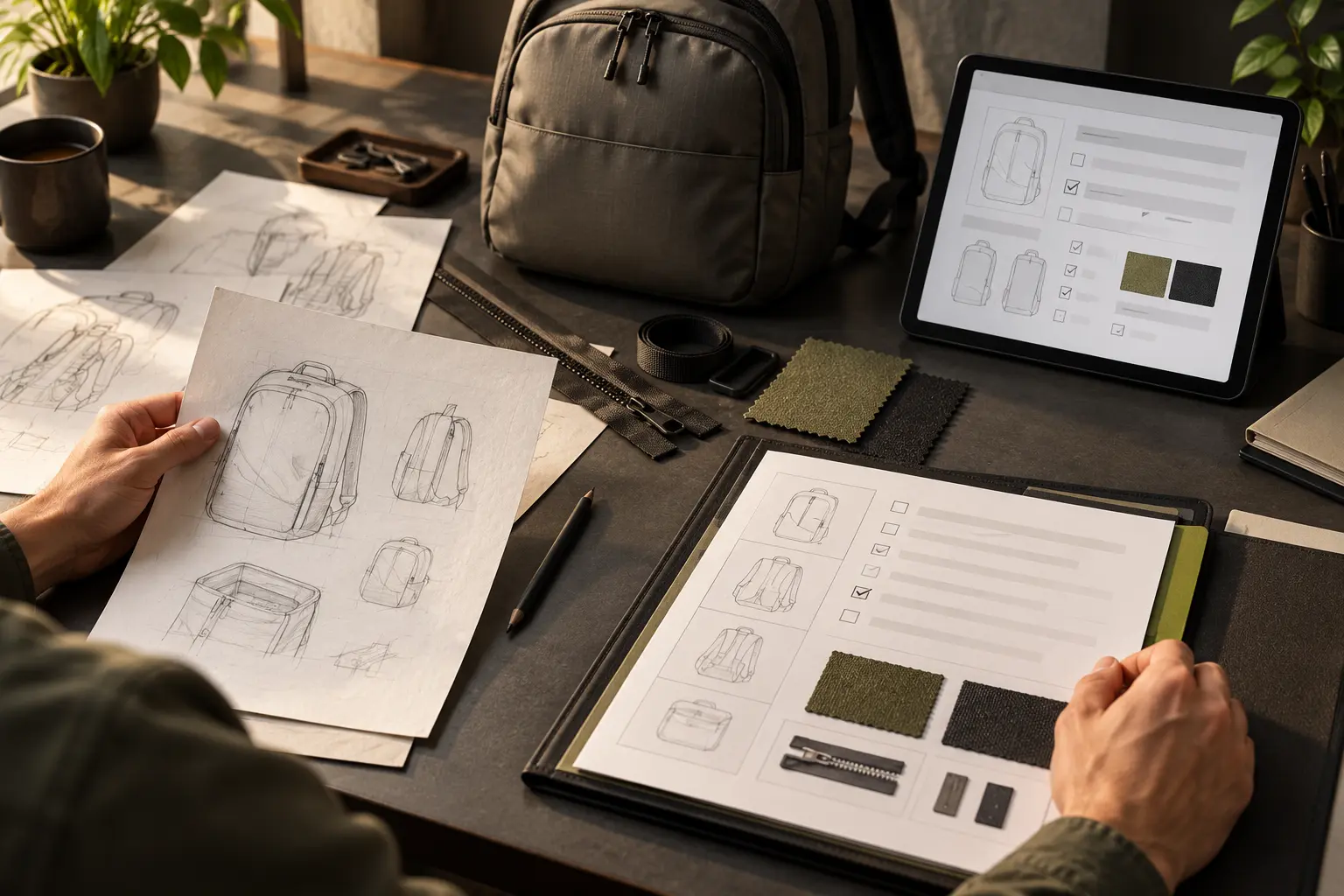
What should start-ups do when they do not have test data yet?
Start with the use case, not a famous material name.
- Describe the user, load, environment and expected product life.
- Mark the high-wear, wet, load-bearing and appearance-critical zones.
- Set a target product weight and commercial level.
- Ask the factory for two or three traceable material directions.
- Compare physical swatches and prototype the most important construction.
- Define the tests needed before making a public performance claim.
A clear partial brief is enough to begin. The FFG Bags Tech Pack Checklist shows the information that helps turn an early concept into a serious material discussion.
What should established brands compare before changing fabric?
A replacement material should be evaluated against the approved reference, not only against a written name. Record:
- Supplier and exact material code
- Fiber composition and yarn construction
- Finished weight, width and tolerance
- Weave, coating, lamination and face finish
- Approved color standard
- Relevant laboratory results and test conditions
- Sewing, bonding, printing and edge-finishing behaviour
- Change in product weight, hand feel and appearance
- Compliance or recycled-content documents required for the sales market
If recycled nylon, recycled polyester or preferred cotton is requested, define the claim and evidence before approval. Textile Exchange emphasizes verification, transparency and chain of custody for material claims. A recycled label should not be treated as proof of finished-product performance, and a performance result should not be treated as proof of recycled content.
What belongs in the tech pack for an approved bag fabric?
At minimum, identify:
- Material supplier and exact reference
- Fiber composition
- Yarn size or denier where relevant
- Finished weight and usable width
- Weave or knit construction
- Coating, lamination and finish
- Color standard and approval method
- Bag zone and pattern pieces using the material
- Test method, target and acceptance rule
- Approved swatch or sample reference
- Permitted substitution process
This is more useful than writing only “500D nylon,” “600D polyester” or “heavy canvas.” For an explanation of denier and its limits, see Fabric Denier Explained.
How does FFG review a material direction?
FFG starts with the intended product, user and exposure. The team can then discuss material availability, construction, appearance, processing, target quantity, price direction and the evidence needed before approval.
We do not treat a fiber name as a guarantee. The practical sequence is:
- Define the requirement and product zones.
- Identify traceable candidate materials.
- Review swatches, supplier data and relevant documents.
- Sample the construction.
- Confirm any required tests and final reference.
- Lock the approved material and substitution rule in the working specification.
Explore our custom bag manufacturing capabilities, review more Educational articles, or send FFG your brief, reference sample or material question.
The short answer
Choose nylon when a defined technical nylon construction best meets the durability, flexibility and weight target. Choose polyester when the selected polyester construction gives the right performance, appearance, availability and commercial balance. Choose canvas when its natural texture and product character justify the weight, care and weather tradeoffs.
Then verify the actual fabric. The best material name is not a substitute for a complete specification, a physical sample and evidence matched to the product’s real use.