How a Structured Digital Brief Reduces Delays in Custom Bag Development
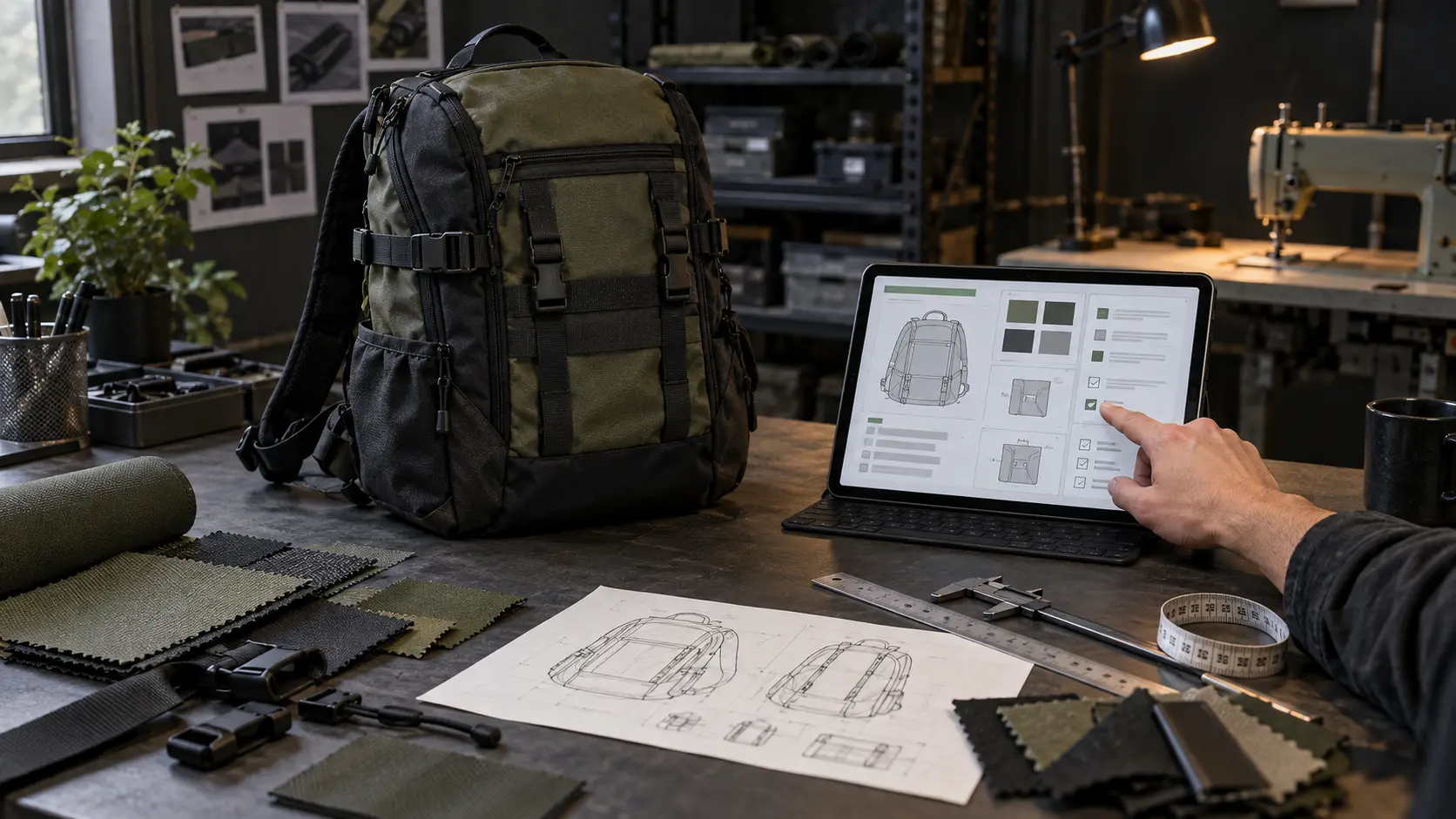
A structured digital brief reduces development delays by putting the product goal, technical information, commercial constraints, files, open questions and decision owners into one organised record. It helps the buyer and factory see what is confirmed, what is missing and what must be decided before quotation or sampling.
The benefit does not come from making a form longer. It comes from turning scattered information into clear actions without replacing the discussion and technical judgement that a custom product still requires.
Why do custom bag projects lose time before sampling?
Many development delays begin before anyone cuts fabric. The initial enquiry may contain a useful concept, but the supporting information is spread across emails, messaging apps, drawings, photographs, spreadsheets and different versions of a tech pack.
Common examples include:
- The intended user is clear, but the loaded weight is not
- Dimensions appear in both a drawing and an email, with different values
- A reference image shows a feature that is not mentioned in the written brief
- The material name is provided without performance or exposure requirements
- Target quantity is missing, so sourcing and minimums cannot be assessed properly
- A delivery date is given without time for sample review and approval
- Several people comment on the sample, but no final decision owner is identified
- A revised file arrives without clearly replacing the earlier version
None of these necessarily means that the project is unsuitable. They simply create questions. If the questions are found late, the sample, price or calendar may need to be revised.
What is a structured digital brief?
A structured digital brief is a controlled project record that organises information into defined sections. It may be completed through a private online form, created internally from a customer enquiry, or developed together during a project review.
It should distinguish three states:
| Status | Meaning | Next action |
|---|---|---|
| Confirmed | The information is clear enough to use, subject to normal factory feasibility checks | Record it in the working specification |
| Partly defined | The direction exists, but an important detail or file is missing | Assign a question and decision owner |
| Early stage | The buyer and factory still need to develop the requirement | Define the next practical development step |
This is more useful than a single question such as “Is the tech pack complete?” A technical file is complete only when the information needed for the relevant decision is available and consistent.
What information should be structured first?
For a custom bag or technical soft-goods project, the first brief should organise at least seven areas.
1. Product and use case
Define the bag type, intended user, what it carries, where it will be used and what problem it must solve. A technical backpack for field equipment creates different requirements from a retail tote, medical response bag or travel organiser.
2. Product definition
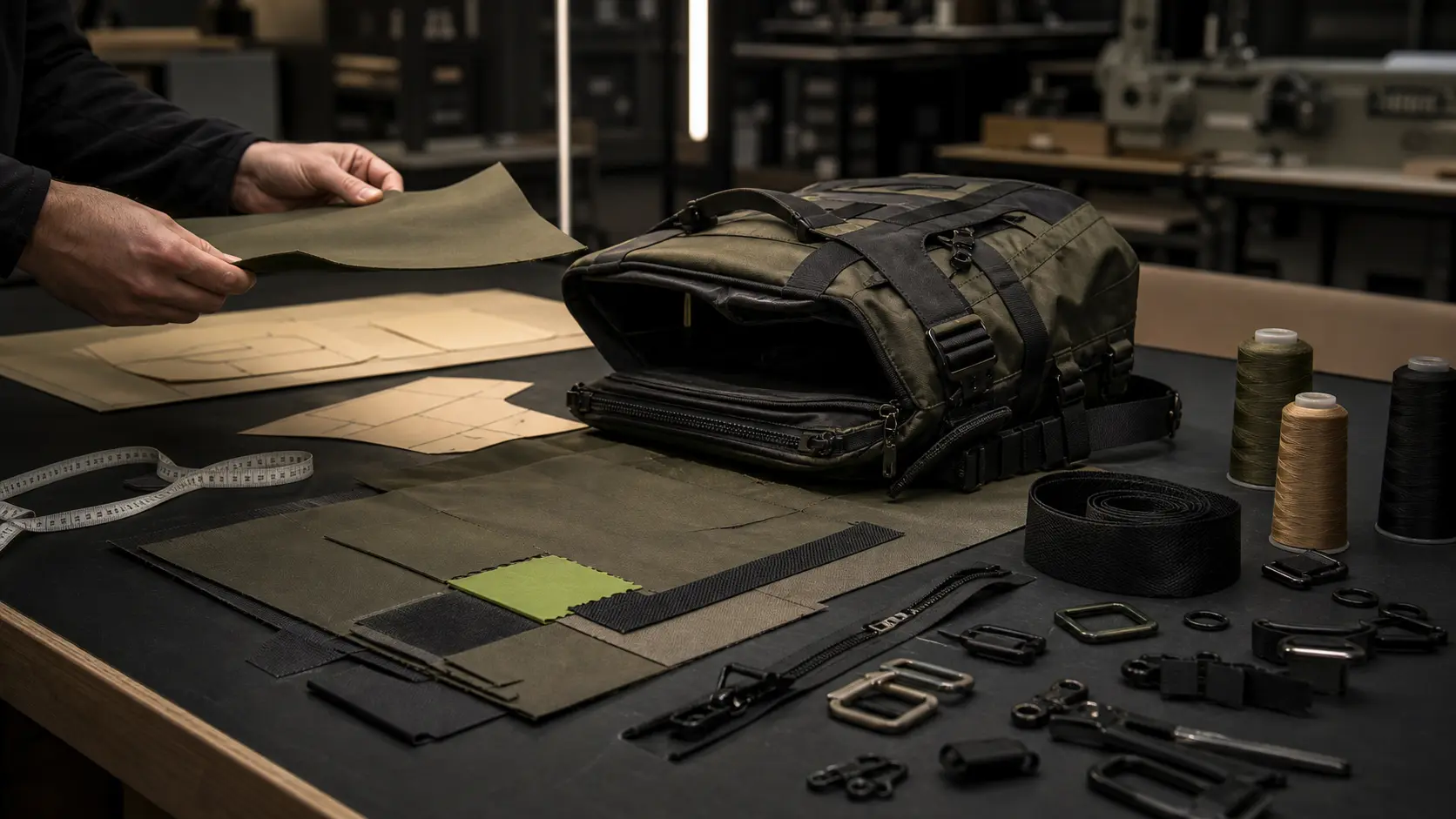
Gather drawings, reference photographs, samples, dimensions, capacity, compartments, pockets, closures, straps and other functional details. Separate confirmed requirements from inspiration images.
3. Materials and performance
Record the material direction, appearance, budget level and relevant exposure or durability needs. These may include abrasion, water resistance, UV exposure, hydrolysis, mildew, salt, sweat, temperature or cleaning requirements.
4. Branding and packaging
Identify logo files, application method, position, size, colorways, labels, hangtags, folding and packing requirements. These details can affect materials, operations, approvals and cost.
5. Commercial context
Include the target quantity or acceptable MOQ range, target FOB or cost direction, sales market and intended launch position. A factory cannot evaluate a sourcing path properly without understanding volume and commercial expectations.
6. Timing
Separate the desired sample date, sample-review time, approval target, production window and delivery requirement. One final date is not enough to show whether the complete sequence is realistic.
7. Testing and approval
Define required tests, compliance documents, performance claims and who may approve the sample. When several stakeholders are involved, record whose decision closes each question.
The FFG Bags Tech Pack Checklist provides a practical reference for the information that can support this brief.
How does structure reduce sample delays?
Structure helps in four practical ways.
| Control | Development benefit |
|---|---|
| Missing-information check | Important gaps are visible before they interrupt pattern making, material sourcing or sampling |
| Source record | The team can see whether a requirement came from an email, drawing, reference sample or later approval |
| Decision ownership | Every unresolved question has someone responsible for answering or approving it |
| Version control | Revised files and decisions can replace earlier information without silently losing the history |
The goal is not to eliminate change. Product development naturally produces new information. The goal is to make each change visible and connect it to the affected sample, material, price or timeline.
A practical FFG example: structured project assessment
FFG Bags has developed a private digital project-assessment workflow for selected enquiries. A customer can receive an invitation linked to their project, review structured questions, add notes and provide available project files.
The assessment covers areas such as:
- Product type and use case
- Target user, sales channel and usage environment
- Reference samples, photographs and drawings
- Dimensions, component list and construction details
- Materials, trims, branding and colorways
- Target price, quantity and timing
- Testing, performance and approval requirements
- Technical complexity factors that may require additional development
The result gives FFG a reader-friendly project summary and structured information that can support the internal review. The customer receives a pre-assessment, not an automatic commercial or technical promise. FFG still reviews the evidence and confirms the final development scope.
This distinction matters. A digital tool can organise answers and expose missing information. It cannot inspect a physical reference sample, validate the construction, promise a price or approve a delivery date without the responsible people and supporting evidence.
The workflow can be demonstrated privately with fictional information during a factory visit. Customer data and internal commercial decisions do not need to be exposed to show how the process works.
Does a digital brief replace a tech pack?
No. The two documents have related but different purposes.
| Digital brief | Tech pack |
|---|---|
| Organises the current project understanding | Defines the technical product in detail |
| Shows what is known and missing | Records dimensions, materials, construction and controlled specifications |
| Helps determine the development path | Supports sampling and production execution |
| Can begin when the idea is incomplete | Becomes more complete as the product is developed |
An early-stage customer may begin with a digital brief and reference images. An established product team may submit a detailed tech pack immediately. In both cases, the factory must check whether the information is consistent, realistic and sufficient for the next decision.
Where can AI assistance help responsibly?
AI can assist with parts of this workflow when the limits are clear. It may help extract information from an enquiry, compare documents, identify contradictory values, group open questions or prepare a draft summary for staff review.
It should not independently decide:
- Whether a construction is physically feasible
- Which material is finally approved
- The commercial price or payment terms
- A committed sample or delivery date
- Whether a test result is acceptable
- Whether a customer has approved a product revision
At FFG, digital and AI-assisted work is being developed around explicit human controls. The useful question is not “Can AI do this?” but “Which routine preparation can be assisted while the responsible person keeps the decision?”
This is why outputs should show their sources, uncertainty and remaining actions rather than presenting a polished summary as if every detail were confirmed.
What should happen after the brief is completed?
A completed brief should lead to decisions, not simply become another saved file.
The factory review should produce:
- A list of confirmed project inputs
- Missing details and contradictions
- Technical or sourcing risks requiring review
- Questions assigned to the buyer or FFG team
- The recommended development and sampling scope
- Documents or samples still required
- A clear next action and responsible person
Only after this review should the team treat the project as ready for the relevant next step. Readiness for a quotation is not automatically readiness for sampling, and an approved sample is not automatically a complete production release.
Common mistakes with digital project intake
A digital form can still fail if the process behind it is unclear. Avoid:
- Collecting many answers without explaining which ones block the next step
- Treating every uploaded file as current and approved
- Converting missing information into an unverified assumption
- Giving customers an automatic score that appears to guarantee price or feasibility
- Allowing the digital summary and the technical file to evolve separately
- Using AI-generated wording without checking the original source
- Asking customers to re-enter information already provided
- Automating external promises that require commercial or technical approval
Good automation reduces re-entry and highlights decisions. It does not hide uncertainty.
Checklist: is the brief ready for factory review?
Before the development review, check whether the record contains:
- A clear product type and use case
- Target user, load and environment
- Available drawings, photographs or reference sample
- Dimensions and important tolerances
- Materials, trims and performance expectations
- Branding, colorways and packaging direction
- Target quantity and commercial target
- Sample, approval, launch and delivery timing
- Required testing or compliance documents
- Named decision owners
- Clearly identified open questions
- Current file versions and source links
Incomplete information is acceptable at the beginning. Hidden gaps and conflicting instructions are the real risk.
The main takeaway
A structured digital brief does not make custom product development automatic. It makes the current state of the project visible.
That visibility helps the buyer and factory understand what is confirmed, what still needs development and who must make each decision. It also creates a cleaner foundation for the tech pack, material review, sampling, costing and eventual production file.
Explore our earlier guide to turning a bag idea into a manufacturable product, review the FFG collaboration process, or browse the full Educational article library.
If you have a concept, reference sample or existing tech pack, send the available information to FFG Bags. We can review what is clear, identify the missing decisions and recommend the next practical step.