How to Turn a Bag Idea Into a Manufacturable Product
A bag idea becomes manufacturable when it is translated from a concept into clear technical choices: use case, dimensions, materials, construction, pattern, sample feedback and final production requirements. The goal is not only to make a bag that looks right, but to make one that can be produced consistently at scale.
For founders, product managers, designers and sourcing teams, this step matters because many good ideas fail between sketch and factory floor. The product may be attractive, but if the brief is unclear, the material is unrealistic, the construction is too complex or the target price does not match the design, development can become slow and expensive.
At FFG Bags, we see custom bag development as a practical path from idea to production readiness. The process does not need to be mysterious, but it does need structure.
FFG Bags development map
From bag idea to manufacturable product
A clear custom bag project moves through decisions, not guesses.
Use case
User, load and environment.
Brief
Photos, dimensions and target quantity.
Feasibility
Construction, cost and risk review.
Materials
Fabric, trims, hardware and compliance.
Pattern
Panels, structure and sewing path.
Sample
Physical test and feedback.
Production file
Locked sample, details and repeatable instructions.
Best first package: use case, photos or sample, dimensions and target quantity.
Best factory answer: feasibility, cost drivers, sampling path and missing details.
Quick answer
To turn a bag idea into a manufacturable product, a buyer should define the use case, prepare a clear brief, review manufacturability with the factory, choose realistic materials, build and test a sample, record feedback, then lock the final production file before mass production.
| Stage | Buyer question | Factory output |
|---|---|---|
| Use case | What problem must the bag solve? | Product direction and key constraints |
| Brief | What information is available today? | Development path and missing details |
| Feasibility | Can the idea be made repeatedly? | Construction, cost and risk review |
| Sample | Does the product work in real life? | Prototype, corrections and next actions |
| Production file | What is finally approved? | Repeatable instructions for production |
Start with the real use case
Before discussing color, fabric or pocket layout, define what the bag must do in the real world.
A technical backpack for field equipment does not have the same priorities as an EDC commuter pack, an outdoor hydration vest, a medical response bag or a tactical drone carrier. Each use case creates different decisions around structure, access, comfort, water resistance, load, padding, organization and durability.
The most useful starting questions are simple:
| Question | Why it matters |
|---|---|
| Who will use the bag? | Defines comfort, access and durability needs |
| What will it carry? | Defines compartments, structure, padding and load |
| Where will it be used? | Defines fabric, water resistance and hardware choices |
| What loaded weight is expected? | Defines reinforcement, strap design and stitching |
| What must improve versus existing products? | Defines the real product value |
This first step turns a vague idea into a product direction. A buyer does not need to have every answer, but the clearer the intended use, the easier it is for a factory to recommend realistic construction choices.
Turn the idea into a practical brief
The next step is to describe the product in a way a development team can work with. This can begin with sketches, photos, a reference sample, a competitor benchmark, a mood board or a written explanation.
For a custom bag project, a useful brief usually includes three types of information:
| Brief area | Examples |
|---|---|
| Product information | Product type, intended use, dimensions, target capacity, equipment layout |
| Commercial information | Target order quantity, market level, target price range, delivery country |
| Technical information | Reference photos, physical sample, preferred materials, branding, packaging, compliance needs |
This does not need to be perfect. Many buyers come to a factory before they have a complete file. What matters is giving enough information for the manufacturer to understand the product goal, the level of complexity and the development path.
For buyers who already have a technical file, the Tech Pack Checklist is a useful reference. For buyers who do not, photos, a reference sample and a clear use case are often enough to begin a serious discussion.
Check whether the idea can be manufactured
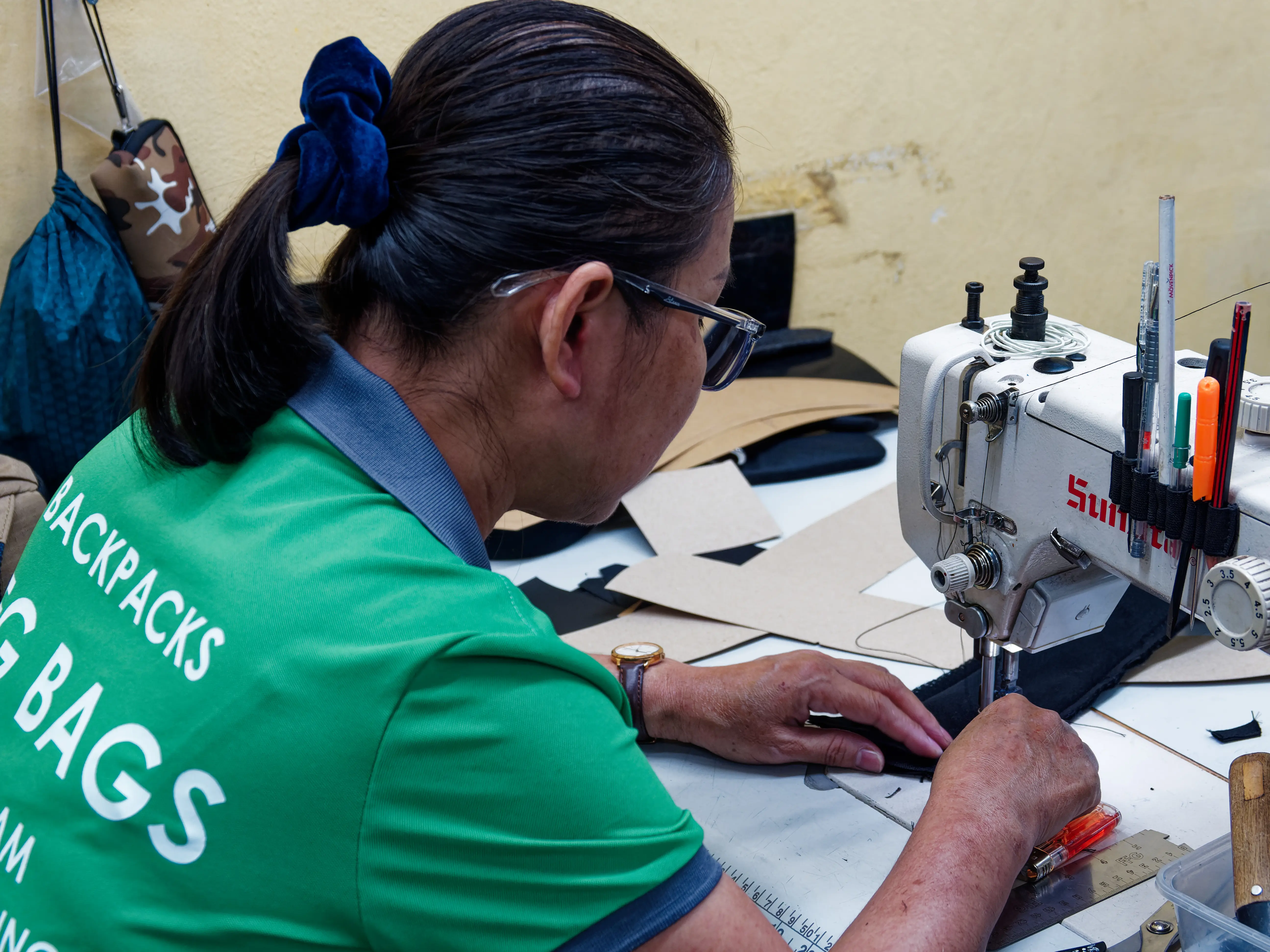
Design and manufacturing are connected. A feature that looks simple on a drawing can affect sewing time, material consumption, tool access, machine choice, quality control and cost.
During manufacturability review, the factory checks whether the design can be built repeatedly, not only once as a prototype.
This review should look at both design and production:
| Review point | What the factory checks |
|---|---|
| Material behavior | Whether the proposed fabric, foam and trims suit the construction |
| Sewing access | Whether curves, corners, zipper paths and tight areas can be assembled cleanly |
| Structure | Whether the bag keeps its shape and carries load correctly |
| Reinforcement | Whether stress points need bartacks, binding, foam or extra panels |
| Quantity fit | Whether custom components make sense for the expected order size |
| Inspection | Whether quality can be checked consistently during production |
This stage often improves the product. A small construction adjustment can reduce risk, improve durability or make the sample easier to reproduce in production. The best factory feedback is not simply “yes” or “no”; it explains the tradeoff.
Select materials with performance, cost and availability in mind
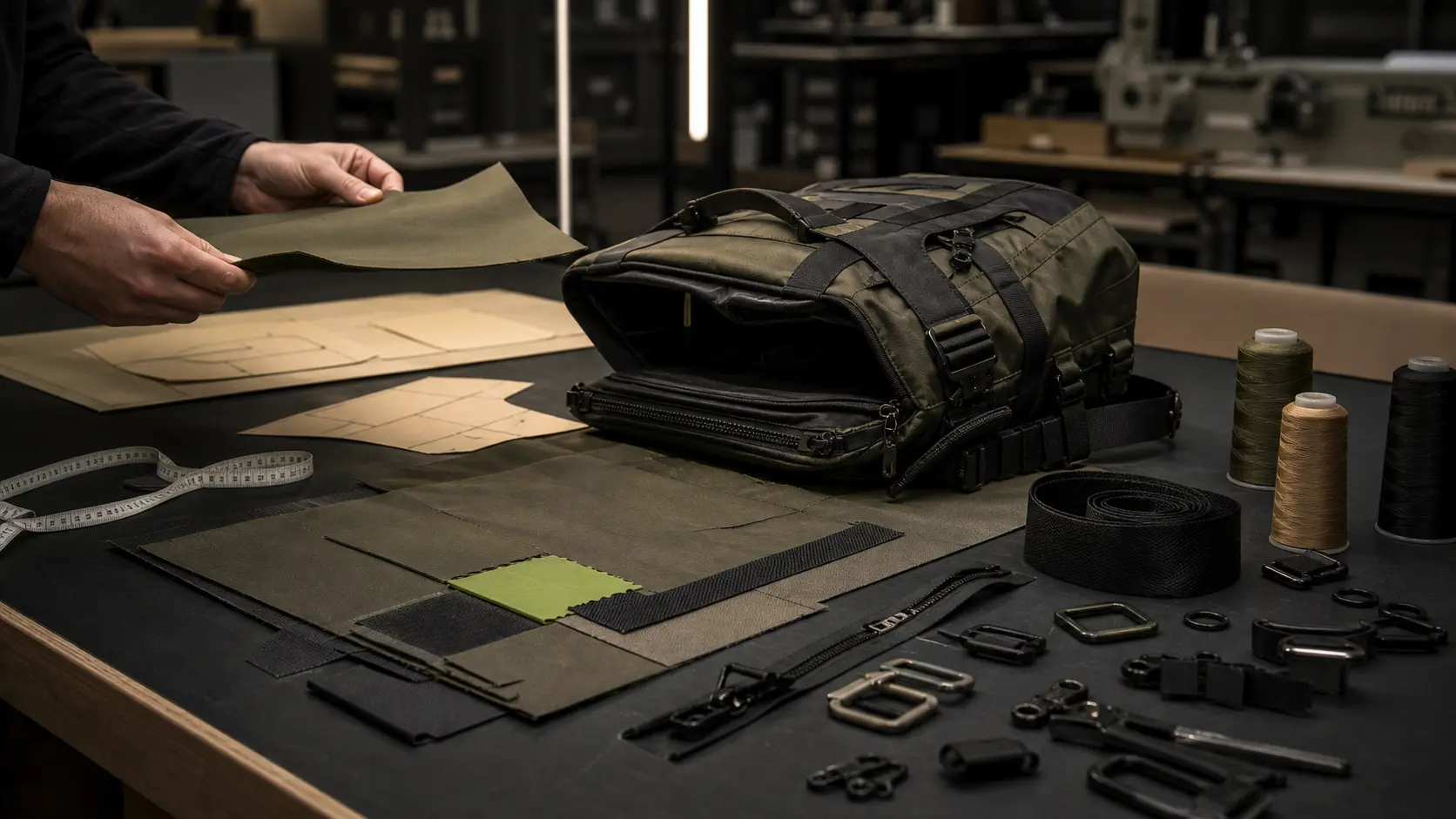
Material selection is one of the biggest differences between a nice concept and a manufacturable product.
For technical bags, material choices may include outer fabric, lining, foam, reinforcement, mesh, webbing, thread, binding, zippers, buckles, hooks, labels, coatings, waterproofing treatments and packaging.
The right material depends on the product goal. A tactical pack may prioritize abrasion resistance, structure and modular attachment. An outdoor daypack may prioritize weight, comfort and weather resistance. A professional tool bag may prioritize reinforcement and load capacity. A promotional bag may prioritize cost and visual presentation.
Buyers should avoid choosing materials only because they sound premium. A heavier fabric is not always better. A recycled material may need specific documentation. A waterproof construction may require more than a water-resistant fabric. A custom color may increase minimum quantity or lead time.
The practical question is: which material set gives the best balance between performance, price, availability and production reliability?
Project readiness scorecard
What makes a bag idea ready for sampling?
The stronger these six areas are, the easier it is to quote, sample and prepare production.
Use case
Define: who uses it, what it carries, where it works.
Why: clear product direction.
Technical brief
Define: dimensions, photos, reference sample, features.
Why: faster quotation and sampling.
Material logic
Define: performance, availability, cost and compliance.
Why: realistic sourcing path.
Manufacturability
Define: pattern, sewing access, reinforcement, inspection.
Why: lower production risk.
Sample feedback
Define: marked photos, measurements and load comments.
Why: cleaner next sample round.
Production lock
Define: approved sample, final materials, packing and quantity.
Why: repeatable production.
Incomplete is acceptable; unclear is expensive. Send what you have, then close the gaps before production.
Build the first sample to test assumptions
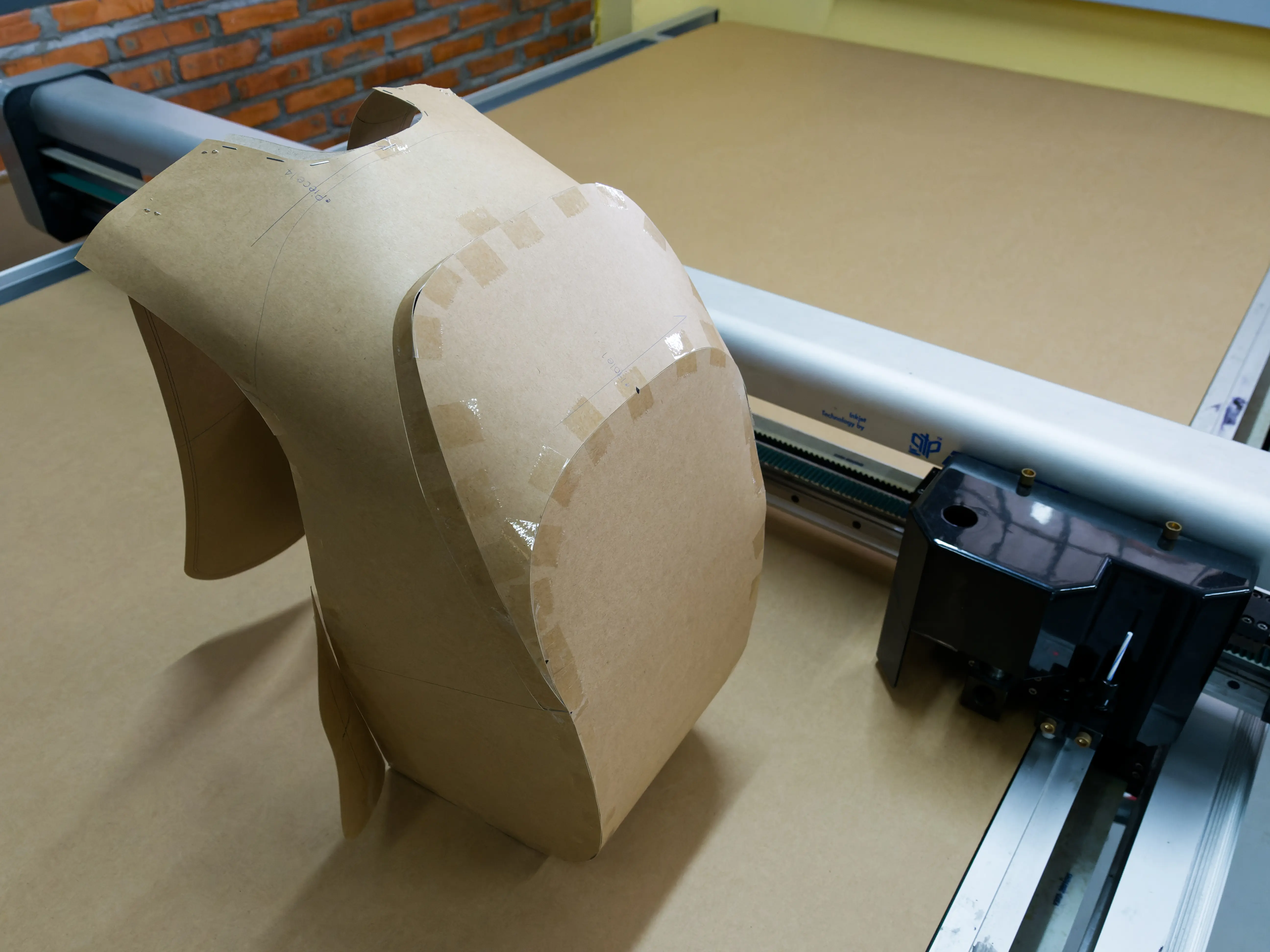
Sampling is where the idea becomes physical. The first sample is not only a visual model. It is a test of size, shape, construction, material behavior, sewing sequence and usability.
A first sample helps answer questions that are difficult to solve on paper.
| Sample check | What to look for |
|---|---|
| Fit and balance | Loaded comfort, strap angle, weight distribution |
| Access | Main opening, pocket depth, zipper direction, tool or equipment reach |
| Structure | Whether the bag holds shape or collapses in the wrong places |
| Protection | Foam thickness, compartment stability, stress areas |
| Appearance | Proportions, branding position, market level |
| Production logic | Whether sewing and assembly can be repeated cleanly |
First samples often reveal corrections. That is normal. A zipper may need to move, a pocket may need more depth, foam may need to be thicker, a strap angle may need adjustment or a panel shape may need revision.
The goal is not to avoid feedback. The goal is to make feedback precise.
Use sample feedback to improve the product
Good sample feedback is specific. Instead of saying “make it better,” the buyer and factory should identify exactly what needs to change and why.
The most useful feedback combines a location, a requested change and a reason.
| Weak feedback | Better feedback |
|---|---|
| The pocket is not good. | Front pocket should be 20 mm deeper so the radio fits without pressure on the zipper. |
| The straps feel wrong. | Shoulder straps need a wider angle at the top because they sit too close to the neck under load. |
| Please improve the look. | Move the logo patch 30 mm higher and align it with the top seam of the front panel. |
| Make it stronger. | Add reinforcement at the lower webbing anchor because this area carries repeated pull force. |
Every change should be recorded. If a sample is approved with unclear comments, production risk increases. If the product changes after costing, the quotation may need to be reviewed. If materials change, lead time and minimum quantities may also change.
This is why the tech pack or project file should be treated as a living document during development. It becomes more accurate after each sample round.
Prepare for production before production starts
A product is production-ready when the main decisions are locked.
Before mass production, the buyer and factory should confirm the final production file.
| Production item | Why it must be locked |
|---|---|
| Approved sample | Becomes the physical reference for production |
| Final pattern | Controls panel shape, size and construction |
| Materials and trims | Controls sourcing, lead time, cost and compliance |
| Color and branding | Prevents visual mismatch |
| Packaging | Affects packing time, carton size and customer presentation |
| Quantity breakdown | Drives purchasing, planning and production scheduling |
| Quality expectations | Defines what will be checked and accepted |
| Required documents | Supports procurement, compliance or customs needs |
This stage prevents avoidable surprises. A factory can plan production more reliably when materials, construction and approvals are stable. A buyer can also compare timelines and costs more clearly when the product specification is no longer changing.
Common mistakes that slow development
Many delays come from the same avoidable issues.
The most common mistakes are:
- Starting with a design but no clear use case
- Asking for a quote before dimensions, materials or quantity are known
- Choosing features without considering cost or manufacturability
- Changing materials after sampling without updating the specification
- Giving vague sample feedback
- Treating the approved sample and final production file as separate things
- Expecting a low minimum quantity while requiring many custom components
These mistakes do not mean the project is bad. They simply make the path less clear. A structured development process helps turn uncertainty into decisions.
What to send a factory first
If you want to start a custom bag project, send the information you already have. It does not need to be complete.
The best starting package is:
- A short description of the product and intended user
- Reference photos, sketches or a physical sample
- Approximate dimensions or capacity
- Target order quantity
- Target market or price level
- Material preferences, if any
- Required features
- Branding and packaging needs
- Delivery country
- Any compliance requirements
From there, the factory can usually tell you what is clear, what is missing and what needs to be decided before sampling or quotation.
Short answers for buyers
Do I need a complete tech pack before contacting a factory?
No. A complete tech pack is helpful, but it is not always required at the first conversation. A reference sample, photos, dimensions, target quantity and clear use case can be enough to start.
How many sample rounds does a custom bag usually need?
Many projects need one to three sample rounds, depending on complexity, material choices, buyer feedback and how clear the first brief is.
What makes a bag manufacturable?
A bag is manufacturable when the materials, pattern, construction, trims, dimensions, quality expectations and approved sample can be repeated consistently in production.
When should price be discussed?
Price should be discussed early, but a reliable quotation needs enough detail. Quantity, materials, dimensions, construction complexity, branding and packaging all affect cost.
Practical takeaway
Turning a bag idea into a manufacturable product is not one single step. It is a sequence: define the use case, prepare the brief, review manufacturability, choose materials, build a sample, improve the product and lock the final production file.
The earlier these decisions are made clearly, the faster the project can move toward a reliable sample and a controlled production run.
If you already have a tech pack, reference sample or early product idea, FFG Bags can review it and help identify the next practical step. If you are still shaping the concept, start with the Tech Pack Checklist, review our custom bag manufacturing capabilities, or contact the team with your brief.