What Makes a Bag Design Manufacturable?
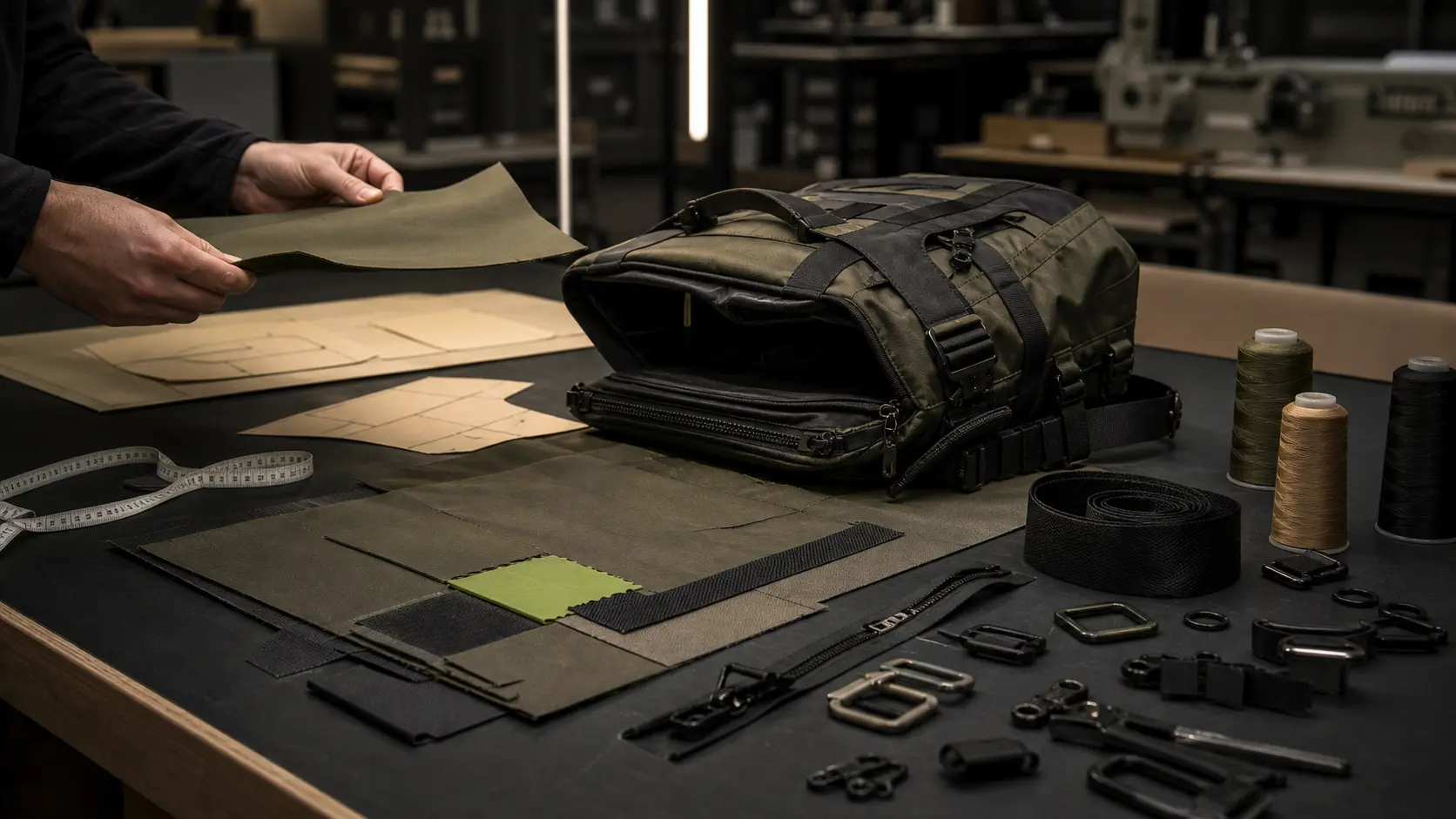
A bag design is manufacturable when it can be built repeatedly with the right materials, realistic construction, clear tolerances and a production method that still makes sense for the target quantity, quality level and price. In other words, the question is not only “Can this bag be made?” but “Can this bag be made well, consistently and commercially?”
This matters because many bag concepts look convincing on a screen or in a sketch, but become difficult once pattern making, sewing access, reinforcement, materials, hardware sourcing and inspection requirements are reviewed together. A design can be attractive and still be risky, slow or unnecessarily expensive to produce.
At FFG Bags, manufacturability review is one of the most useful steps in custom bag development. It helps buyers improve the product before time and money are spent on the wrong sample path.
Quick answer
What makes a bag design manufacturable is the combination of seven things: a clear use case, realistic dimensions, materials that suit the product, construction that can be sewn consistently, components that are available for the target quantity, quality points that can be checked during production, and a final cost level that still fits the project.
If one of those areas is weak, the design may still be possible, but it will be harder to quote, sample, scale or control.
Manufacturability map
Seven factors must work together
A design becomes production-ready when product intent, construction and commercial reality support each other. Weakness in one area usually creates pressure somewhere else.
Why manufacturability is often misunderstood
Buyers sometimes treat manufacturability as a factory-only issue. In practice, it is a product decision issue.
For example:
- A slim backpack profile may look cleaner, but leave too little room for foam, seam allowance and zipper installation.
- A highly structured bag may feel premium, but require extra reinforcement, more labor and tighter tolerances.
- A custom buckle may strengthen branding, but create a sourcing problem if the order quantity is still low.
- A waterproof expectation may sound simple, but require more than a coated fabric if seam construction and closures do not support it.
This is why design for manufacturability should happen before production, and ideally before the first sample round is treated as final. The goal is not to remove ambition from the product. The goal is to translate ambition into technical choices that a factory can control.
The seven areas that decide whether a bag design is manufacturable
1. A clear use case
The first question is whether the product brief explains what the bag must do in real life.
A commuter backpack, a tactical equipment bag, a medical response bag and an outdoor pack can all share similar shapes while requiring very different construction logic. Load, access, weather exposure, abrasion risk, comfort expectations and organization needs all affect what “good manufacturing” means.
Without a clear use case, factories are forced to guess. Guessing usually creates either overbuilding, which raises cost and weight, or underbuilding, which creates product risk later.
2. Realistic dimensions and proportions
A design also needs dimensions that work physically, not only visually.
This includes:
- Compartment depth versus the size of the carried item
- Panel width versus seam allowance and foam thickness
- Pocket position versus zipper opening access
- Strap anchor placement versus balance under load
- Lid, flap or gusset geometry versus actual volume
Many layout problems are not visible in a flat drawing. They become obvious only when the pattern is made or when the first sample is assembled. A manufacturable design gives enough room for materials, seams and function to coexist.
3. Materials that match the job
A bag design is not manufacturable if the chosen materials fight the intended construction.
Material decisions affect:
- How panels fold or hold shape
- How cleanly seams turn
- How much bulk builds up at joins
- Whether prints, coatings or laminations can tolerate sewing stress
- Whether the bag meets durability, weight or compliance requirements
For example, a rigid laminated fabric may support structure well but make tight seam areas harder to assemble cleanly. A very soft recycled fabric may support a sustainability target but require reinforcement changes if the bag carries heavy equipment. Material logic has to support both performance and factory process.
4. Construction that can be sewn repeatedly
This is one of the biggest manufacturability tests.
A prototype can sometimes be completed through extra care, slow handling or informal workarounds. Production is different. The construction has to work repeatedly across many units, operators and checkpoints.
Factories review questions such as:
| Construction point | Manufacturability question |
|---|---|
| Curves and corners | Can they be sewn cleanly and repeatedly without distortion? |
| Layer build-up | Does the area become too thick for stable sewing quality? |
| Hidden seams | Can the operator access the seam path with the chosen machine setup? |
| Reinforcement | Are stress points protected without making assembly unstable? |
| Binding and finishing | Can edges be finished cleanly at the intended speed? |
| Assembly order | Is there a practical sewing sequence from first panel to final close? |
If the sewing path is awkward, blocked or too sensitive, the product may still be possible, but defect risk, inconsistency and cost will rise.
5. Components that fit the target quantity
Manufacturability is also a sourcing question.
A design may rely on custom pullers, molded parts, branded hardware, special webbing colors, reflective trims or unusual foams. Those choices may be technically valid, but the factory still needs a realistic sourcing path for the target order size and timeline.
That is why a design review should ask:
- Are the required trims available from proven suppliers?
- Do custom parts require minimums that exceed the project plan?
- Are color matches realistic across different material types?
- Does the lead time of the slowest component fit the launch schedule?
- Are there backup options if one item becomes unavailable?
This is where many designs stop being commercially manufacturable even when they remain technically possible.
6. Quality points that can be checked
A manufacturable design must also be inspectable.
If important quality points cannot be checked clearly during production, the design becomes harder to control. That includes seam symmetry, measurement tolerances, compartment fit, bartack placement, print position, foam stability, zipper behavior and cosmetic appearance.
In practical terms, the factory needs to know:
- Which points are critical to fit and function
- Which measurements must stay within tolerance
- Which areas carry load and need reinforcement confirmation
- Which cosmetic details matter most to the brand
- Which defects are unacceptable at final inspection
If inspection logic is unclear, the sample may look good but repeatability in production becomes weaker.
7. A cost structure that still makes sense
The final test is whether the design remains viable at the target market level.
Manufacturability is not only about making the bag work. It is also about making the bag work at a cost and quantity that support the business case.
Common cost drivers include:
- Too many construction steps for the intended price level
- Excessive material waste from complex panel shapes
- Over-specified trims for a simple product tier
- Repeated handling caused by difficult assembly
- Custom components that require high minimums
- Tight cosmetic requirements in low-value areas
A design becomes stronger when the buyer understands which features create real user value and which ones mainly add cost or risk.
A practical design-for-manufacturability review for bags
At FFG Bags, a useful manufacturability review usually covers five decision areas together:
| Review area | What to verify | Typical risk if unclear |
|---|---|---|
| Product brief | User, load, environment, target quantity, market level | Wrong construction direction |
| Design geometry | Dimensions, access, volume, pocket logic, fit | Poor usability or rework in sampling |
| Material system | Fabric, foam, lining, webbing, zipper, hardware, compliance | Performance mismatch or sourcing delay |
| Production method | Pattern logic, sewing sequence, reinforcement, finishing | High defect risk or unstable quality |
| Commercial fit | MOQ, tooling, lead time, target price, fallback options | Quote mismatch or launch delay |
When these five areas are reviewed together, the factory can explain where the design is already strong and where a small change would improve manufacturability.
Common signs that a bag design is not ready yet
A design does not need to be perfect before contacting a factory. But some warning signs usually mean more clarification is needed before quoting or sampling can move efficiently.
Common warning signs include:
Readiness warning map
When a design needs more clarification
The factory cannot choose the right construction logic without knowing how the bag will be used.
The design may be technically possible but commercially unrealistic for the planned market level.
Good-looking layouts can still be too tight to sew, inspect or use comfortably.
Premium choices need availability, weight, cost and quantity checks before sampling.
Fabric choice, seam logic, closure design and user expectation must all point in the same direction.
The team needs to know which details matter most during inspection and final approval.
These issues do not mean the project should stop. They simply mean the next step should be design clarification, not blind sampling.
Examples of manufacturability tradeoffs in custom bag development
Clean shape versus sewing access
A buyer may want a sharply shaped front panel with multiple layered compartments. Visually, this can look premium. In production, however, tight corners and stacked materials may reduce sewing access and create waviness, inconsistent topstitching or weak seam appearance. A small panel change can preserve the look while improving the assembly path.
Lightweight build versus durability
An outdoor product may aim for low weight, but the carried load, abrasion zones and strap forces may still require reinforcement. If the design removes too much structure, the sample may look right but fail under real use. A manufacturable design balances weight targets with realistic stress management.
Custom branding versus supply flexibility
Branded hardware can strengthen product identity. It can also extend lead time, raise minimums and reduce backup sourcing options. In some programs, it makes sense. In others, a standard hardware platform with strong branding elsewhere creates a better launch path.
Water resistance versus process reality
Some buyers ask for a waterproof bag when they mainly need weather protection. That difference matters. Water-resistant performance may be achievable through fabric, flap design and zipper choice. True waterproof performance may require different seam and closure logic, which changes cost, handling and construction.
What buyers should prepare before asking for a manufacturability review
The most useful starting package is usually:
- Product use case
- Approximate dimensions or target capacity
- Expected load or carried equipment
- Reference photos, sketches or a sample
- Target quantity
- Target market or target price level
- Material preferences, if known
- Branding requirements
- Delivery country and compliance requirements
This is often enough for a serious first review. If a tech pack already exists, even better. If not, a structured brief is still enough to begin.
Buyers who are still shaping their first product can start with the earlier guide on how to turn a bag idea into a manufacturable product, then review the Tech Pack Checklist and FFG Bags’ custom bag manufacturing capabilities.
A simple checklist for judging manufacturability
Before moving forward, ask these questions:
- Is the bag’s real use case clearly defined?
- Do the dimensions leave enough room for function, structure and seam allowance?
- Do the selected materials support both performance and assembly?
- Can the construction be sewn repeatedly, not only once by hand care?
- Are the trims and components realistic for the target quantity?
- Can the critical quality points be checked clearly during production?
- Does the design still fit the target price and lead time?
If the answer is uncertain on several points, the design probably needs refinement before sampling becomes efficient.
Short answers for buyers
Can a bag be sample-made even if it is not fully manufacturable yet?
Yes. A first sample can still be useful for testing shape, layout and function. The risk is treating that early sample as production-ready before the construction, material and sourcing issues are fully solved.
Does manufacturable mean simple?
No. A technical bag can be complex and still be manufacturable. The difference is whether the complexity is controlled, intentional and repeatable in production.
Who should lead manufacturability review?
It works best as a shared discussion between the buyer, designer and factory. The buyer defines the product goal, the designer defines intent and the factory explains what can be produced reliably.
When should manufacturability be reviewed?
As early as possible. The best time is before the product direction becomes too locked, but after there is enough information to evaluate use case, materials, dimensions and commercial targets.
Practical takeaway
What makes a bag design manufacturable is not one isolated feature. It is the fit between product intent, materials, pattern logic, sewing access, sourcing reality, inspection control and commercial viability.
The earlier these areas are reviewed together, the easier it becomes to avoid wasted sample rounds, quotation confusion and preventable production risk.
If you already have sketches, a reference sample or an early tech pack, FFG Bags can review the design and point out the next practical decisions. If you are still defining the project, start with the Tech Pack Checklist, review our collaboration process, or contact the team with your brief.